
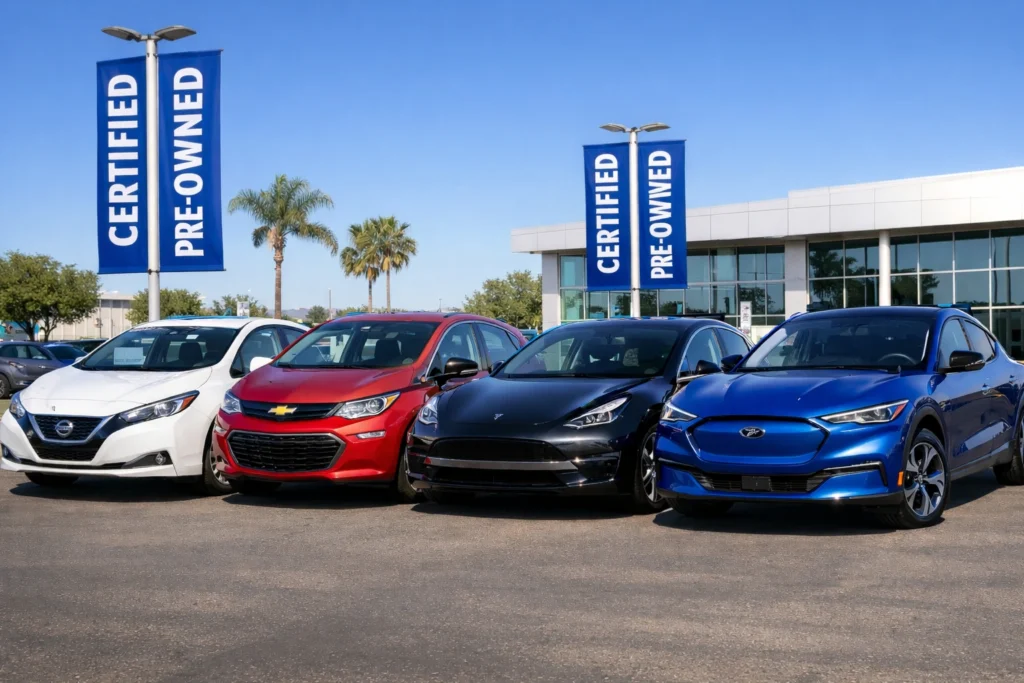
The Nissan Leaf, Chevrolet Bolt, Tesla Model 3, and Ford Mustang Mach-E are the best used EV cars in 2026. These models combine proven reliability, solid range, and strong resale value. This year is perfect to buy because thousands of two- and three-year leases from the 2023 EV boom are ending, so these cars are likely available at steep discounts.
What Makes a Used EV a Good Deal in 2026?
The best used EVs balance battery health, charging compatibility, and warranty coverage. Let’s know in more detail.
Battery Health Comes First
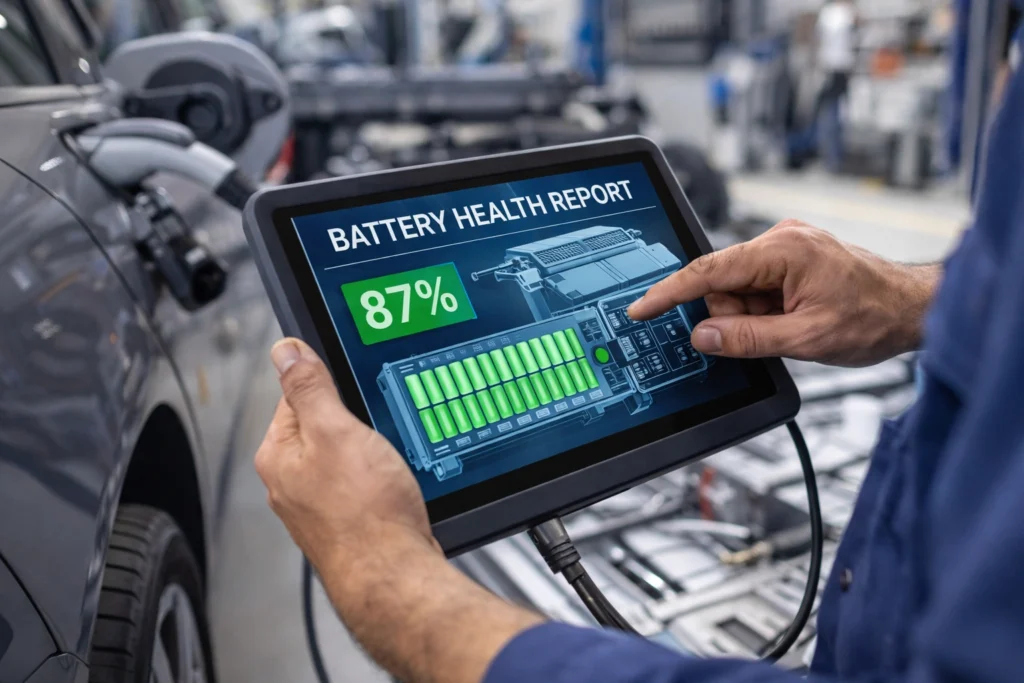
Battery health is the most important factor when buying a used EV because it determines how much of the original range the car retains. Look for a state of health above 85%. Keep in mind that hot climates and frequent fast charging can accelerate degradation, since heat stresses battery cells.
Charging Network Compatibility
If you want convenient charging wherever you go, CCS ports are your best bet. They work with most networks across North America, including Tesla Superchargers with adapters. Older CHAdeMO plugs (like on early Nissan Leafs) limit your options as stations phase out this standard. Before committing to any vehicle, check which charging networks are available in your area.
Warranty Coverage Remaining
Certified pre-owned EVs often extend original warranties by 1-2 years with battery coverage included. This protection can save you thousands because battery replacements outside warranty typically cost $5,000-$15,000.
Best Used EV Cars 2026: Top Picks by Budget
These are the best used EV cars 2026 has to offer, based on reliability, real-world range, and resale value:
Under $15k: Nissan Leaf (2018-2020)
Second-generation Leafs with 40kWh batteries deliver around 170 miles combined range in mild weather. This alone puts them among the most reliable used EV cars you can buy. These models also use older parts shared with mainstream Nissans like the Juke, which makes maintenance predictable and affordable. For such low mileage on an electric vehicle, the price point of around $12,000 is reasonable for budget-conscious buyers.
$15k-$25k: Chevrolet Bolt EV
This Bolt generation from 2019-2021 ranks among the best second-hand EV cars, delivering 238-259 miles EPA range with new replacement batteries from GM’s recall program. You’re essentially getting a brand-new battery in a used electric car. It’s also family-friendly with its spacious hatchback design and 16.9 cubic feet of cargo space.
$25k-$35k: Tesla Model 3 (2019-2021)
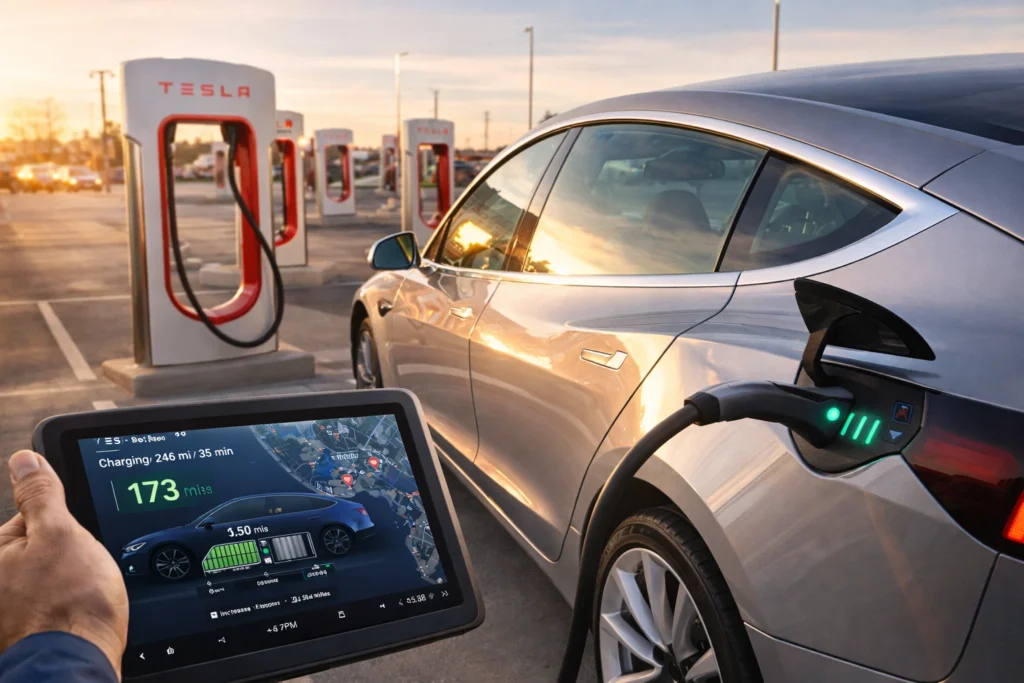
Many buyers consider the Tesla Model 3 one of the best EV cars in 2026, but used 2019–2021 models also deliver stellar performance for those on a tighter budget. Most Tesla Model 3 batteries show relatively slow degradation, with real-world Model 3 battery data indicating many retain around 85-90% of their original range after years of use.
Its over-the-air software updates continue adding features and improving performance, so you don’t need dealer visits for upgrades. Plus, Tesla’s Supercharger network spans 75,000 locations globally, making road trips easier and reducing range anxiety.
$35k : Ford Mustang Mach-E (Certified Pre-Owned)
With the extended-range battery, the Ford Mustang Mach-E adds about 73 miles of range in 10 minutes on fast chargers, according to Mach-E fast-charging performance data. Inside, you get a large 15.5-inch touchscreen, adaptive cruise control, heated seats, and Apple CarPlay integration.
If you want extra peace of mind, certified pre-owned models often include extended comprehensive and powertrain warranty coverage beyond the original factory protection.
Where Should You Buy Your Used Electric Car?
You should buy used electric cars from sources that balance protection with price, which include:
- Certified Pre-Owned Programs: CPO options often cost 10-15% more than standard used listings but include multi-point inspections and extended warranties on battery packs and drivetrains. They usually cover high-voltage systems as well, which can be expensive to repair independently.
- Private Sales: If you buy from individual sellers, you’ll save money upfront. However, expect to pay $150-300 for an independent battery health test from an EV specialist before closing the deal.
- Franchise Dealerships: Dealers provide financing options with lower interest rates compared to independent lots. Shopping at franchise dealers also means easier access to vehicle history reports and lower mileage examples.
Your budget and EV knowledge determine which route makes sense. Beginners benefit from CPO protection, while experienced buyers can save thousands going the private sale route.
Red Flags When Shopping for Used Electric Vehicles
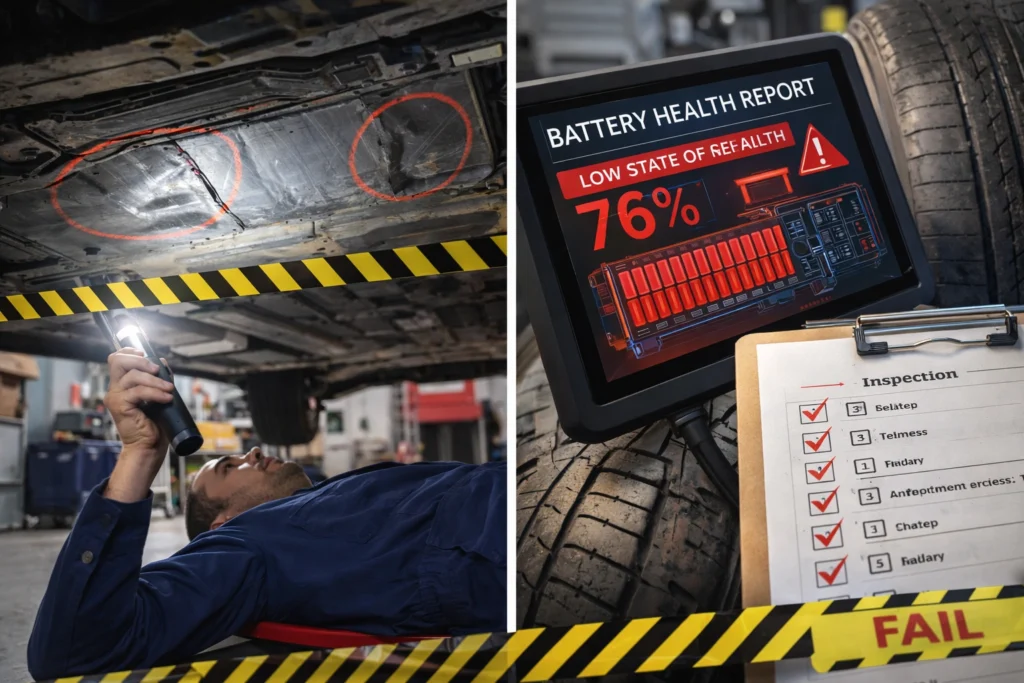
Avoid expensive mistakes by watching for warning signs that indicate battery damage or hidden problems:
- Low Battery State of Health: If the battery’s state of health falls below 80%, you’re likely looking at heavy degradation that may require replacement within a few years.
- Undercarriage Accident History: Even if the exterior looks fine, past accidents that damaged the undercarriage could affect the battery pack, leading to costly repairs or reduced performance.
- Mismatched Tire Wear: Uneven tire wear often signals suspension issues from the added battery weight, which affects both handling and long-term component durability.
- Missing Charging Equipment: When you buy a used EV, check that all original charging cables and adapters are included. Otherwise, you might need to spend $300-800 replacing them after the sale.
Run a full vehicle history report and schedule a pre-purchase inspection with an EV-certified mechanic before committing to any used electric car.
Finding the Right Used EV in 2026
Start by checking battery health reports and warranty coverage remaining on any shortlisted used electric cars. Then take a test drive during your typical commute to verify that real-world range meets your daily driving needs.
And don’t forget to compare total ownership costs, including insurance, charging, and maintenance, against gas-powered vehicles you’re considering. The right choice balances upfront value with long-term reliability.