
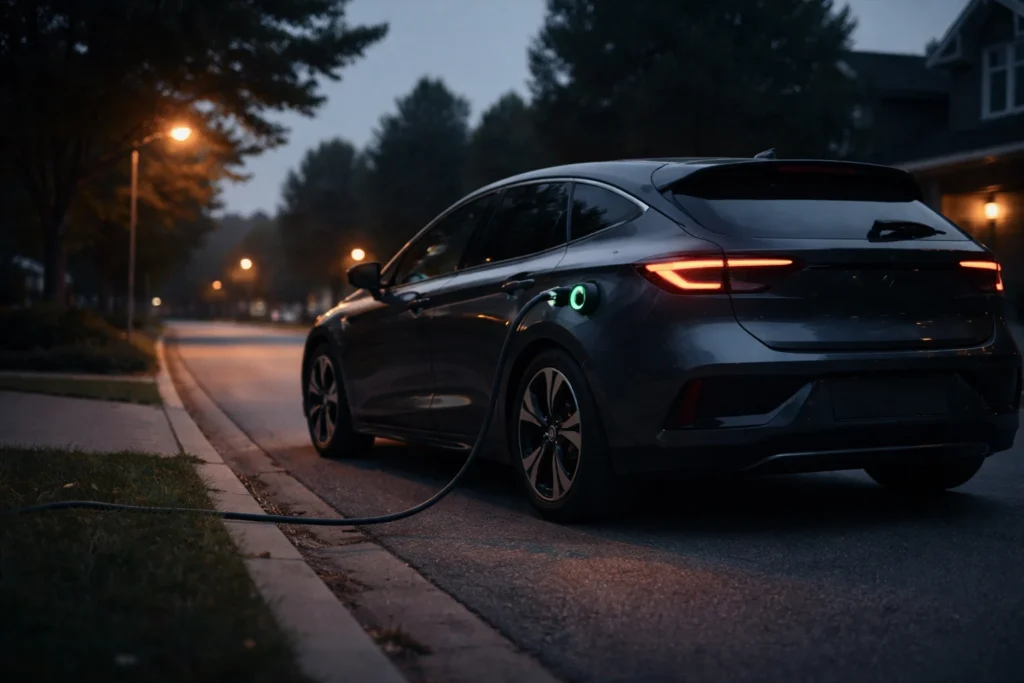
The best affordable EV cars of 2026 now sit well under $45K while delivering usable range for everyday driving. That’s largely due to falling battery costs, which dropped below $100/kWh in 2025 and have continued declining since. The result is more capable EVs, a broader choice, and stronger competition at the affordable end of the market.
Best Affordable EV Cars of 2026: Where Price Meets Real Value
The sweet spot for affordable EVs in 2026 sits between $30K and $45K, but one model undercuts even that.
The Cheapest Electric Car Worth Buying: Nissan Leaf
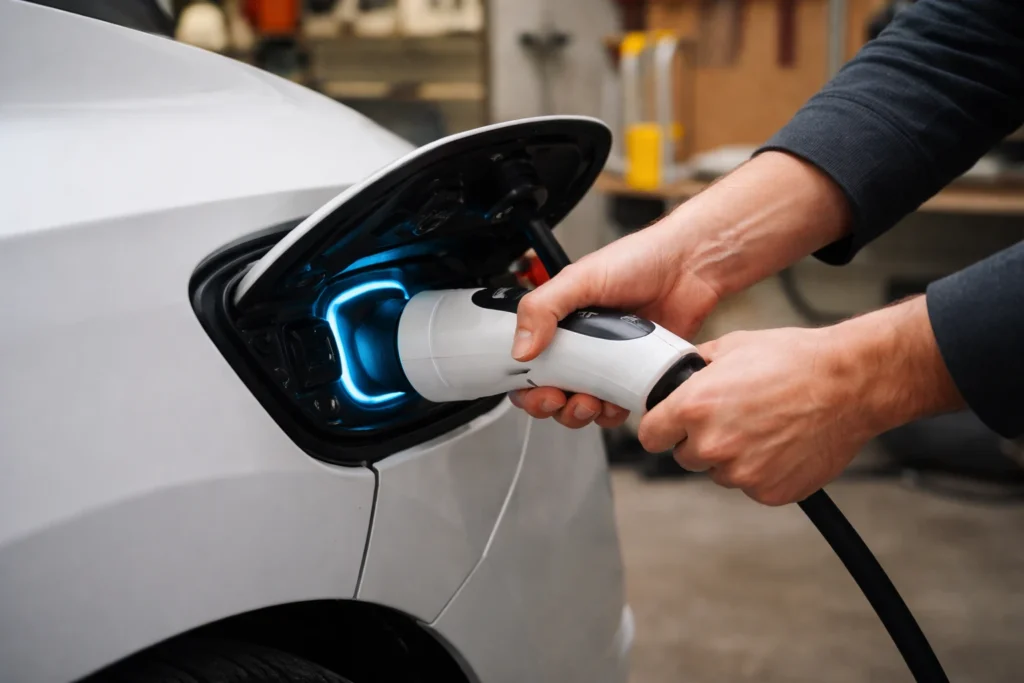
For anyone looking at cheap electric cars in 2026, the Nissan Leaf is the most practical place to start. Priced from $29,990, it remains one of the few budget EVs that delivers meaningful range and everyday usability.
With up to 303 miles of EPA-estimated range, the Leaf easily handles commuting and weekly errands without constant charging stops. Operating costs are also lower than those of a comparable gas vehicle, thanks to reduced maintenance and lower energy costs per mile.
It’s not the newest platform in the segment, but at this price point, few EVs offer a more practical entry into electric ownership.
$30K–$45K: Ford Mustang Mach-E, Toyota bZ, Tesla Model 3
Three models define this tier, and each makes a case for a different kind of buyer.
Toyota’s bZ starts at $34,900 and delivers up to 314 miles of EPA-estimated range, making it one of the strongest value options for buyers who need space without stretching into luxury pricing.
If engagement is your priority, the Ford Mustang Mach-E brings sharper driving dynamics than most rivals in a segment that typically favors practicality.
Rounding out the tier, the Tesla Model 3 tends to hold its value well compared to most budget EVs. It also gives you access to Tesla’s Supercharger network, which simplifies long-distance travel and reduces range anxiety.
At this tier, you’re not just buying a cheaper EV. You’re buying into some of the best EV cars of 2026 at a fraction of what premium models cost.
Best Electric Cars of 2026 by Buyer Type: SUVs, Sedans, and Pickup Trucks

Price is a starting point, but vehicle type is what really determines whether an EV fits your needs. The options below cover the three most common buyer categories at the affordable end of the 2026 market:
- SUVs: The BMW iX and Subaru Solterra sit in the mid-$40K range, depending on incentives and market. If you regularly carry passengers or need cargo space, the extra room and range make the price step-up worth it.
- Sedans: For daily commuters, the Tesla Model 3 and Toyota bZ are the strongest picks. Both keep energy use low on regular routes without sacrificing comfort.
- Pickup Trucks: EV truck options are still limited compared to sedans and SUVs. However, the segment is growing, and 2026 has more accessible entry points than previous years.
Matching the vehicle type to your routine is what separates a good EV purchase from a regrettable one.
Range and Running Costs: What Budget Electric Vehicles Really Cost to Own
The purchase price is only one part of what budget EV cars actually cost you. The bigger picture shows up in your electricity bill, servicing schedule, and warranty terms.
| Model | Est. Annual Energy Cost | Charging Type | Range |
| Nissan Leaf | ~$600 | AC/DC fast charging | 303 miles |
| Toyota bZ | ~$650 | NACS charging | 314 miles |
| Ford Mustang Mach-E | ~$700 | DC fast charging | 300+ miles |
| Tesla Model 3 | ~$550 | Supercharger/NACS | 340+ miles |
Estimates based on average US electricity rates and EPA efficiency ratings.
According to Andersen research via Fleet News, EV running costs sit around 50% lower than an equivalent petrol car annually. Home charging drives most of those savings, while fewer moving parts than a gas engine keep servicing costs consistently low.
To help preserve battery health and keep costs down, charge at home overnight whenever possible. It’s typically cheaper during off-peak hours, and regular home charging is easier on the battery than relying heavily on fast EV charging.
Before You Buy: 4 Things Every New EV Buyer Should Know

Most buyers shopping for low-cost EV cars focus on range and price. But the questions that prevent regret are the ones most people skip before signing.
Do you have reliable charging access at home or work?
Without it, even the best affordable EV becomes inconvenient fast.
What does the warranty cover, and for how long?
Battery warranty terms vary significantly across brands and directly affect how confident you’ll feel about the purchase down the line.
How does this EV hold its resale value?
Depreciation varies across models and can significantly affect the real cost of ownership over three to five years.
Are fast chargers available on routes you drive regularly?
Home charging handles daily use, but road trips depend on accessible DC fast charging along your regular routes.
Pick the EV That Matches Your Daily Drive
Think about the trips you make most often: your commute, weekly errands, and the occasional longer drive. If your EV choice can handle that comfortably on a single charge and you have an easy way to plug in overnight, you’ve found the right fit. The lower running costs are just a bonus.