
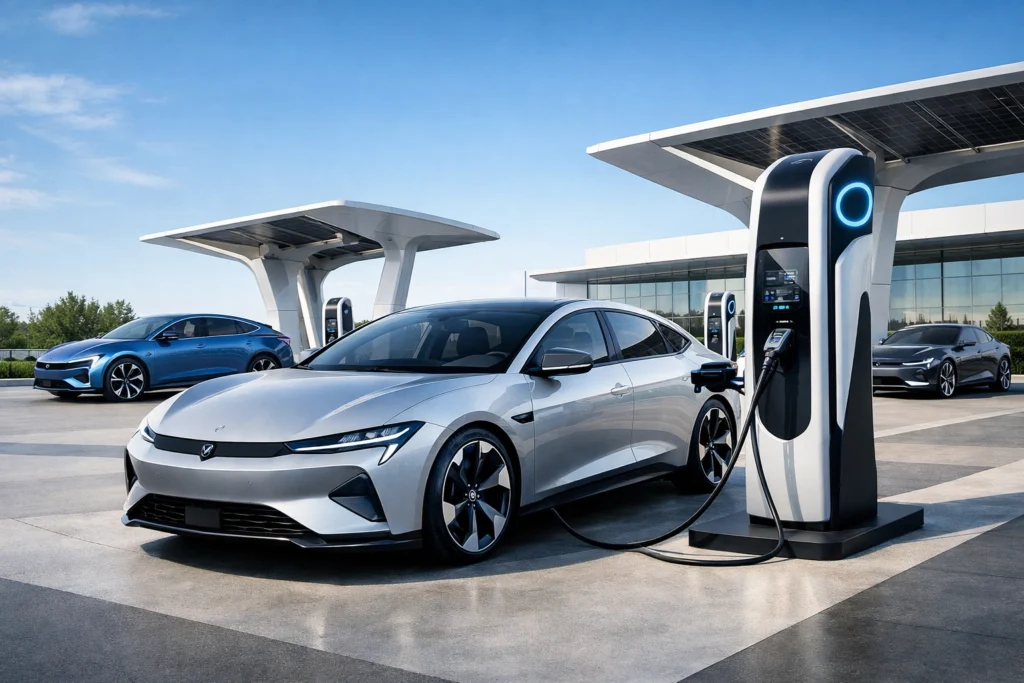
The best EVs coming in 2026 are shaping up to be very different from what we’ve seen before. Longer range, faster charging, and more competitive pricing are finally coming together in ways that make sense for everyday drivers.
If you’ve been waiting for an electric vehicle that actually fits your budget and lifestyle, this might be your year. As range anxiety eases, buyers now have real choices across multiple price tiers.
The market now spans from compact city cars under $27,000 to luxury performance models pushing past 1,000 horsepower. And that level of variety simply didn’t exist a year ago.
Why 2026 Is Shaping Up Different for Electric Vehicles
In 2026, the gap between what EVs promise and what they actually deliver is finally closing. Battery tech is catching up to the hype, charging stations are appearing where you need them, and growing competition is helping push prices down.
- Battery Breakthroughs Are Coming: The lithium manganese-rich batteries hitting production this year cost less to make and last longer than current options. General Motors and Ford both committed to this tech in 2025, which means you’ll start seeing 400-mile EVs at prices that don’t require a second mortgage.
- Fast Charging Is More Practical Now: New 800-volt systems can add 200 miles of range in under 15 minutes. Tesla’s V4 Superchargers push up to 500 kilowatts, which gets you back on the road about as fast as filling a gas tank. Not quite there yet, but close enough that road trips stop feeling like planning exercises.
- Chinese Competition Is Pushing Prices Down: Companies like BYD and Leapmotor are entering Western markets with competitive pricing that legacy brands can’t ignore. As a result, features that used to be luxury-only are showing up in mid-range models, and entry-level EVs are getting better without getting more expensive.
If you’ve been waiting for the right moment to go electric, 2026 is the year to do so.
BMW iX3 Sets New Range Records for Electric SUVs
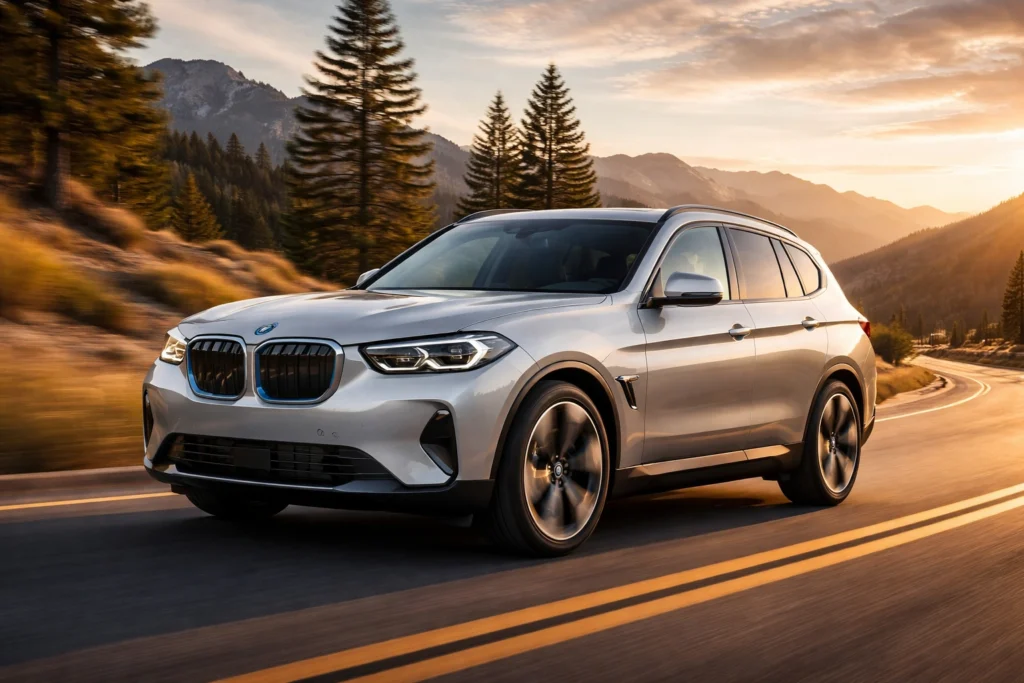
The upcoming BMW iX3 is setting a new benchmark for battery-powered SUVs when it comes to driving range. It can go up to 400 miles on a single charge, which means weekend trips without stopping to recharge along the way.
That driving distance stems from the advanced battery technology BMW developed specifically for this platform. That said, real-world numbers usually fall a bit short of EPA estimates. Even accounting for that, the iX3 should deliver around 350 miles in typical driving conditions. That’s enough for most road trips with just one charging stop.
Of course, range isn’t the only strength here. The iX3 also comes equipped with All Wheel Drive and BMW’s advanced safety features and driver assistance systems technology as standard. The package feels complete for what most buyers expect from a premium electric SUV.
Starting around $60,000, it competes directly with Tesla’s Model Y Long Range and other premium options. BMW built this model on the company’s new Neue Klasse platform and is taking reservations now for deliveries starting in summer 2026.
Best Small EV Cars 2026: Compact Options That Don’t Compromise
Small EVs don’t mean small capabilities anymore. The compact EVs coming in 2026 deliver over 200 miles of range, fast charging, and practical features within a reasonable price range starting under $27,000. That’s less than most mid-size gas sedans cost today.
If your driving is mostly city commutes and short errands, these two models are worth watching:
VW ID. Polo: The Budget-Friendly Daily Driver
At around$26,500, the ID. Polo will be Volkswagen’s most affordable electric vehicle when it becomes available in spring 2026. For that price, you can expect up to 280 miles of range with the larger battery option, and charging speeds up to 130 kW. It’ll also have its iconic hatchback design, so you’re not sacrificing practicality for battery power.
Smart #2: Built for Tight Spaces
The Smart #2 is reviving the ultra-compact two-seater layout of the original Fortwo, with modern electric power. It prioritizes maneuverability over passenger capacity, which makes it ideal for dense urban driving. Expected pricing between$25,000 and $31,000 keeps it accessible, while rear-wheel drive adds a surprisingly engaging driving feel.
Both models prove you don’t need to spend $50,000 or haul around a 100-kWh battery to make electric work for everyday driving.
Adventure-Ready Electric SUVs Coming This Year
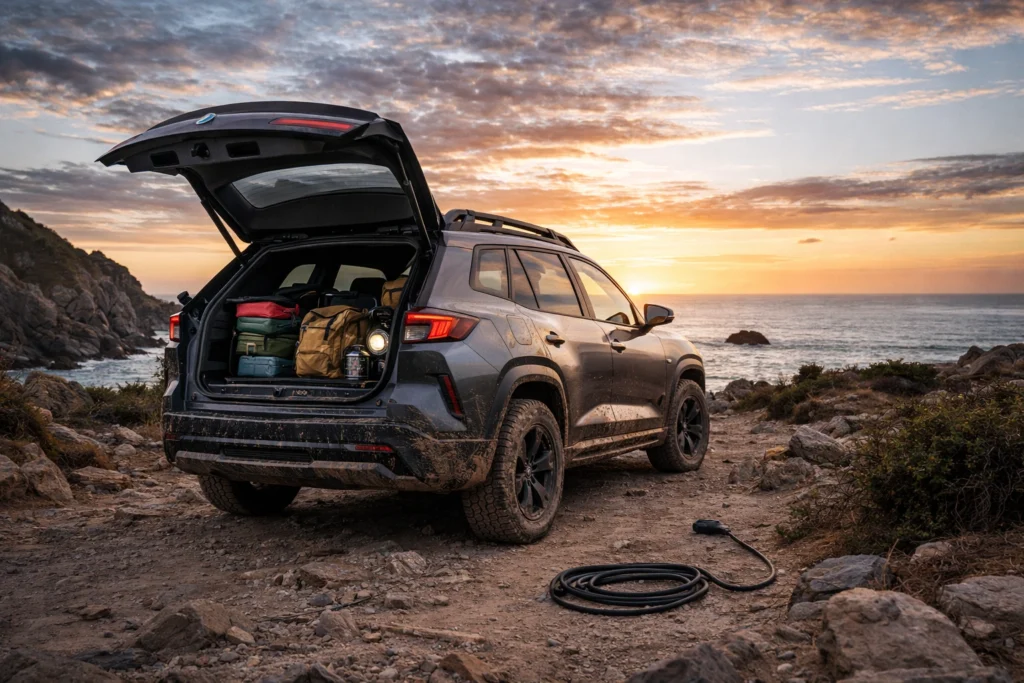
Some of the best EV SUV cars in 2026 are now matching the off-road capability of established gas models like the Jeep Wrangler. These electric SUVs deliver performance through instant torque and improved weight distribution. The result is better control on uneven terrain while maintaining everyday usability.
Several upcoming models show how this capability is playing out across different price ranges:
- Jeep Recon: Jeep’s first fully electric SUV is expected in late 2026, bringing trail-rated capability and removable doors similar to the Wrangler. Its electric powertrain delivers immediate torque for rock crawling and steep inclines, without the delay of engine revs. Given that level of off-road focus, the Recon should cost around $87,000, which positions it as a premium option.
- Range Rover Electric: This luxury option should hit showrooms early in 2026 with targeted capability of over 300 miles between charges. That means you can handle weekend adventures without worrying about finding chargers in remote areas. Pricing is anticipated around $210,000, which would position it against high-end gas Range Rovers, and it’s expected to maintain the air suspension and terrain response systems the brand is known for.
- Leapmotor B03X: Leapmotor’s upcoming B03X is a compact electric crossover aimed at buyers seeking value. With around 250 miles of range at roughly $31,000, it delivers a compelling mix of performance and affordability. The new EV will reach dealers in the second half of 2026, providing SUV versatility without the luxury price tag.
The capability is there now. What you’re really choosing between is how much off-road performance you actually need versus how often you’ll use it.
Best Luxury EV Cars 2026 Actually Deliver on Performance
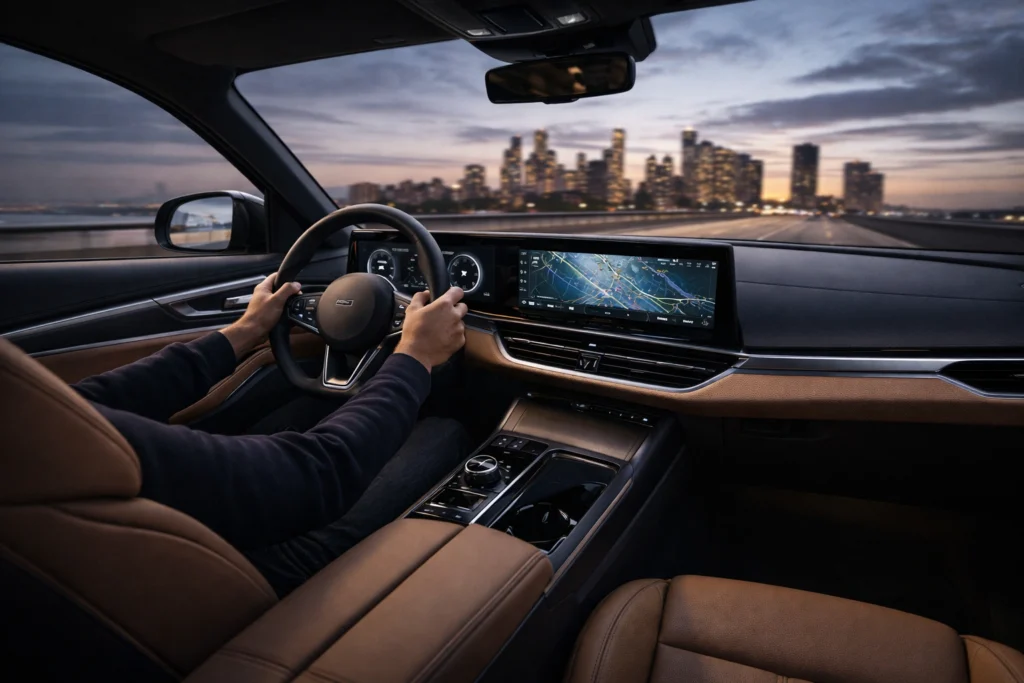
Luxury buyers have been skeptical about battery power for good reason. Early luxury EVs felt heavy, disconnected, and missing the theater that makes supercars special. The 2026 models are finally answering those concerns with over 1,000 horsepower, 300-plus miles of range, and driving dynamics that don’t apologize for being electric.
Two upcoming launches illustrate this shift:
Ferrari Elettrica: The Sound of Silence [and 1,000 HP]
Can a Ferrari still feel like a Ferrari without that V12 scream? We’re about to find out. Ferrari’s first all-battery model arrives in 2026 with power figures rumored to be north of 1,000 horsepower (unconfirmed) and torque delivery that makes current models feel slow off the line.
The company hasn’t announced pricing or exact delivery dates yet, but this launch goes beyond the spec sheet. If Ferrari can make electric feel emotional, every other luxury brand has permission to go all-in.
Jaguar GT: Betting the Entire Brand
Jaguar discontinued its entire lineup as part of a complete brand repositioning, and the GT is the first model to emerge from that reinvention. The stakes are unusually high for this four-door battery-powered sedan.
It costs $130,000, putting it directly against the Tesla Model S Plaid and Porsche Taycan Turbo S, but Jaguar is betting on bold styling and British refinement to stand out. Deliveries start in summer 2026.
Both models represent existential bets on electric luxury. The question isn’t whether they’ll be fast (they will). It’s whether they’ll make you want to drive them.
Fast Charging and EV Range Specs Worth Paying Attention To
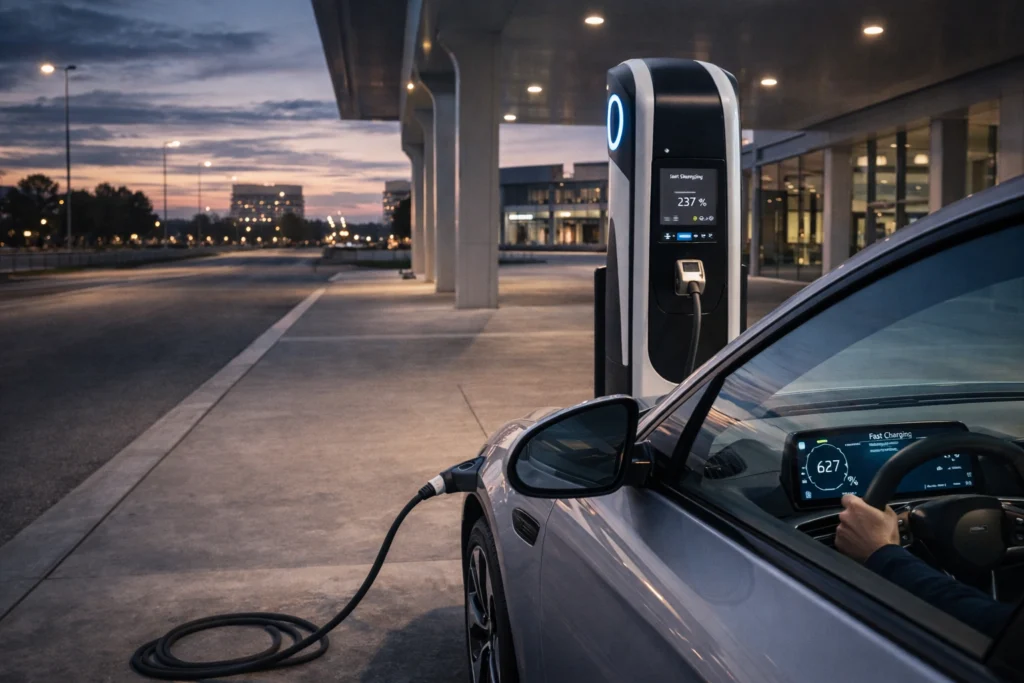
Some 2026 models add 200 miles of range in 10 minutes using 800-volt charging systems. BMW’s iX3 and other Neue Klasse models, for example, support charging speeds up to 400 kilowatts at compatible stations. That’s a significant jump from the 150-kilowatt standard most current EVs use.
That speed largely comes from higher-voltage architectures. Higher voltage reduces charge times by allowing more power to flow into the battery without excessive heat buildup. Many of these systems also use cell-to-pack battery design, eliminating intermediate modules and improving energy density by roughly 10%.
Fast EV charging infrastructure is catching up, too. Networks like Tesla’s V4 Superchargers and IONNA now deliver what’s being called ultra-rapid charging at up to 500 kilowatts of power. The limitation isn’t always the charger anymore. It’s whether your vehicle can handle that much power input without overheating the batteries.
Should You Wait for These Models?
It depends on your timeline and what you need from an electric vehicle right now versus a few months from now. Consider these points when deciding:
- First-half launches: Models like the BMW iX3 use proven technology and start deliveries in spring. If you need an EV soon, expect shorter wait times.
- Second-half releases: The Jaguar GT, Ferrari Elettrica, and Jeep Recon target late 2026. You’ll get more variety, but you should expect longer waits.
- Incentive timing: EV tax credits and rebates change throughout the year. Waiting for a specific model might mean missing current programs or benefiting from new incentives later in 2026.
For most buyers, first-half launches offer the best balance of timing and capability. But if you’re after a specific model or feature, the second half of the year brings options worth waiting for.