
Worried about damaging your EV battery with the wrong charging habits? You’re in the right place, because this guide breaks down exactly how to keep your battery healthy while charging.
We’ll show you how to charge at home properly without running up your electricity bill. And you’ll learn battery health tips, the 20-80 charging rule, and when to use DC fast charging. These EV charging tips work for everyday driving and long road trips alike.
Real EV drivers across Australia have used these same habits to extend their battery life. If you want similar results, read on to learn how to nail EV charging the right way.
EV Charging Habits That Keep Your Battery Healthy
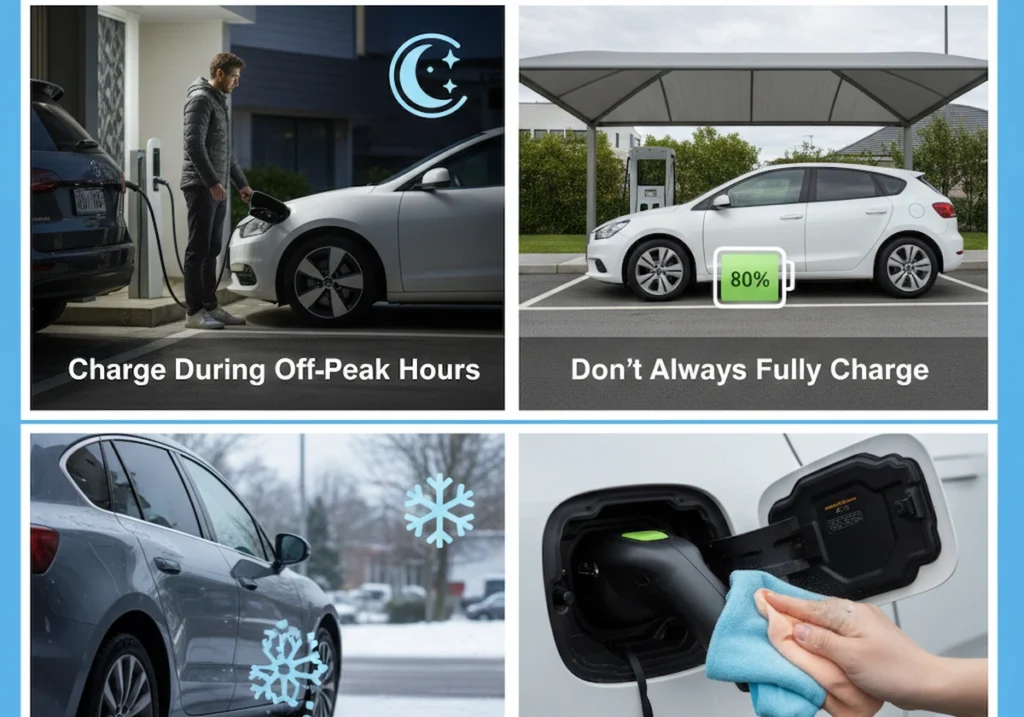
The best habits include home charging, off-peak timing, and choosing the right charger type. Together, these keep your EV battery healthy and extend its life.
And the good news is, none of this takes much effort. All it takes is a few small changes to your routine.

So let’s start with the basics.
Home Charging Practices You Can Start Tonight
Plug in your EV as soon as you get home. This simple habit keeps your battery topped up without waiting for it to drain completely. And with a Level 2 charger, you can add around 25-35 miles (40-56 km) of range per hour, which covers most daily driving needs.
From our experience, a dedicated EV charger is safer and faster than a standard power outlet. But even with a regular outlet, you can start building good charging habits tonight.
How Charge Timing Saves You Money
Charge during off-peak hours. Why? Because rates are lower at night, which means you spend less on every charge. Over time, that’s real money back in your pocket.
Better yet, you don’t have to remember to do it manually. Most EVs let you schedule charging through the app. Set it for off-peak hours once, and your car handles the rest automatically.
Charger Types: Which One Suits Your Lifestyle?
The right charger depends on how you drive. For example, if home charging is your cup of tea, a Level 2 charger is the way to go (yes, we’ve all stared at that slow Level 1 and wanted it to speed up).
But for longer drives, you need DC fast chargers that are built for road trips. These chargers top up your battery in 20-40 minutes, but they’re not meant for everyday use.
Battery Health Tips to Extend Your EV’s Lifespan
You can extend your EV battery’s lifespan by keeping charge levels moderate, avoiding heat, and sticking to consistent charging habits.
Here’s what works:
The 20-80 Rule for Battery Life
A reliable way to extend battery life is to keep your charge between 20% and 80%. This clear range reduces stress on the cells and helps them last longer.
You might be wondering why a full charge isn’t ideal. It comes down to how batteries handle full charge levels. A 100% charge puts extra pressure on the battery, which speeds up wear over time. That’s why most manufacturers only recommend a full charge before long road trips when you need maximum range.
How Temperature Affects Battery Usage
High temperatures speed up battery drain and can cause long-term damage. This impact alone makes extreme heat one of the major threats to your EV battery.
But there’s an easy way to manage this. Simply park in shade or a garage whenever possible (and Australian summers don’t make this easy). Then on cold days, precondition your EV while it’s plugged in. This way, your battery warms up and saves energy before you hit the road.
Small Habits That Protect Battery Lifespan
A few small habits go a long way to protect your battery lifespan. For starters, don’t leave your battery at very low or very high charge for prolonged periods. Otherwise, this puts unnecessary stress on the cells.
Besides that, based on our firsthand experience, software updates can help as well. They improve battery management and support long-term battery performance. So when your EV prompts an update, don’t skip it.
DC Fast Charging: When Should You Use It?
DC fast charging is best for long trips when you need a quick top-up. Of course, it’s not meant for daily use, but it can be a lifesaver on the road. And if you use it correctly, your battery won’t suffer.
So what does that look like in practice?
Finding a Charging Station on the Go
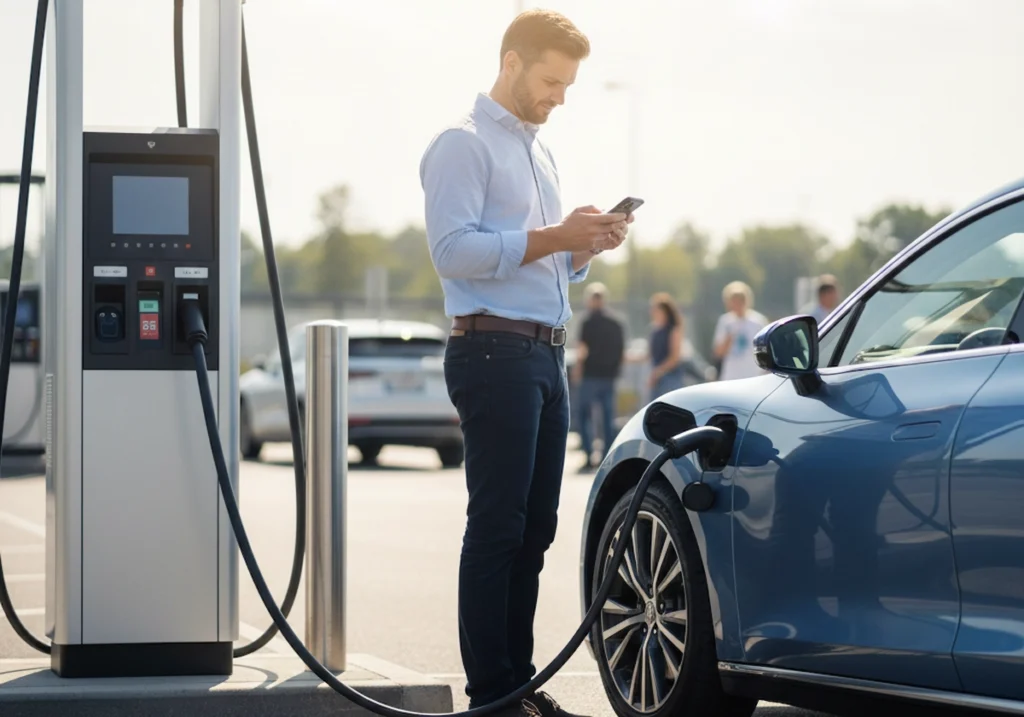
Apps like PlugShare and Chargefox make it easy to find nearby charging stations. And the best part is, both apps show real-time availability, so you know what’s open before you arrive.
Thankfully, many shopping centres and service stations now have DC fast chargers in their car parks. Instead of waiting around, you can use that time to eat or take a quick break.
Fast Charging vs Home Charging
Home charging is cheaper and gentler on the battery for everyday use. This method is the go-to option for most EV owners.
However, DC fast charging has its place, too. Basically, it uses high power to add 100 km in about 20 minutes. That speed is great for road trips, but the heat puts more stress on your battery. The ideal approach is to rely on home charging daily and save fast chargers for longer trips.
How Often Should You Use DC Fast Charging?
Only use DC fast charging when you’re on the road and need a quick top-up. Believe it or not, using it occasionally won’t harm your battery.
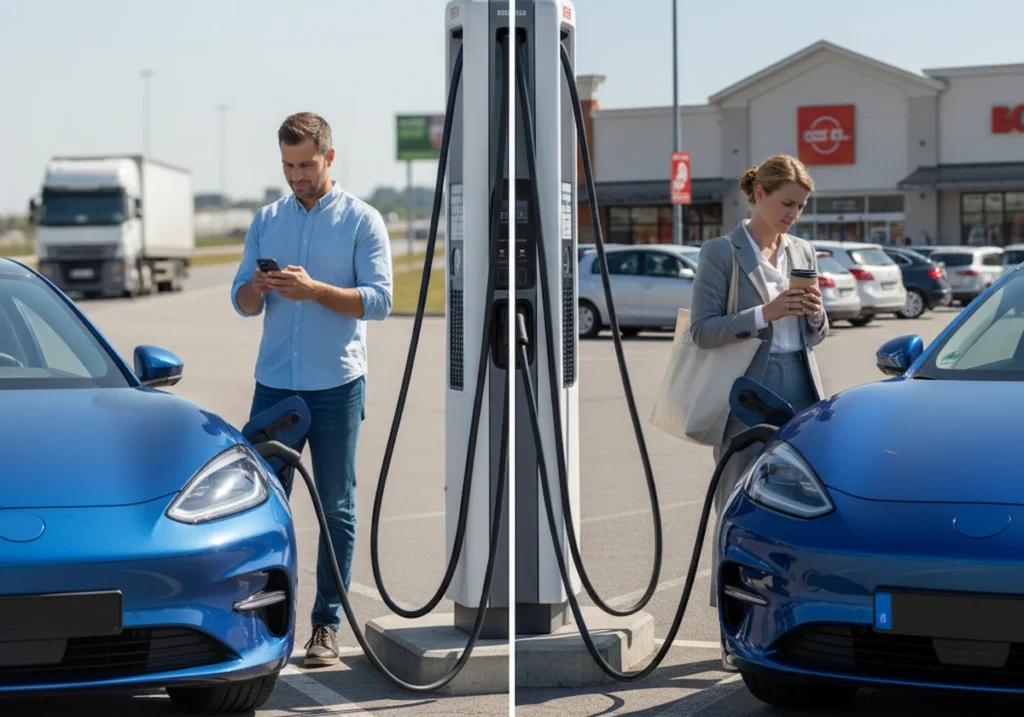
The challenge comes from the heat generated during frequent fast charging, which accelerates cell degradation over time. So, most specialists advise keeping DC fast charging to roughly 20% of your overall use, so your battery stays healthier for longer.
Start Charging Smarter Today
EV charging doesn’t have to be stressful. Yet many drivers worry about damaging their battery with bad habits. But the truth is, a few simple changes can protect your battery and extend its life for years to come.
This guide covered the essentials. From home charging practices to the 20-80 rule, temperature tips, and when to use DC fast charging. Together, these habits keep your battery healthy and your EV ready for everyday driving and long road trips.
Ready to take the next step? Visit EVoasis for more expert advice on chargers, battery care, and smart charging solutions.