
India’s passenger EV sales jumped 77.04% in 2025, with over 25 electric car models available across every price bracket. Which shows how electric mobility has gone mainstream in India. To compete in the market, automakers are expanding their EV lineups with longer ranges, faster charging, and smarter in-car technology.
In this article, we’ll cover the top cars in India you can purchase right now. You’ll also learn about their cost, how far they’ll take you, and whether India’s charging setup works for daily driving.
Let’s find out all the details about Indian EV models.
Best EV Cars in India: What’s on Sale Right Now
The best EV cars in India for 2026 range from ₹7 lakh (~$8k) city compacts to ₹25 lakh (~$28k) SUVs with 450 km range. Popular electric cars now cover every budget, so you’ve got solid EV options beyond just one or two models.
Here are three cars in India that stand out right now.
MG Comet EV: Affordable City Runabout
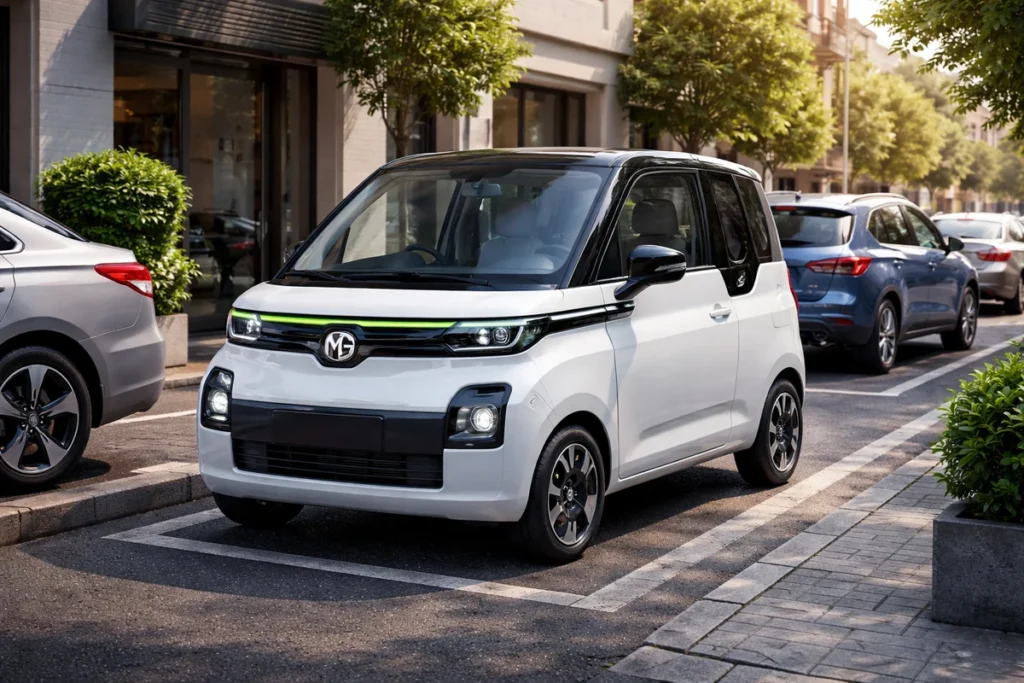
The MG Comet EV provides 230 km range from its 17.3 kWh battery pack, which is good enough for typical 40-50 km daily drives around town. This compact 4-seater makes parking a breeze in tight spots.
The smaller turning radius helps you zip through traffic without much fuss. At an ex-showroom price of ₹6.99-9.24 lakh (~$8-10k), the Comet EV also includes dual touchscreens, voice commands, and digital key sharing.
Tata Punch EV: Best Value for Money
Tata offers two battery options here. The 25 kWh pack gives 315 km range, while the 35 kWh version stretches to 421 km. And the best part is, both are certified figures that hold up in real-world city driving.
The Tata Punch EV starts at ₹10.99 lakh (~$11k) ex-showroom, giving you proper SUV ground clearance with hatchback running costs (your electricity bill stays under ₹800 monthly for 1500 km). Besides that, the 122 PS electric motor in the top variant offers punchy acceleration for highway merges and overtakes.
Mahindra XUV400 EV: Longest Range Under ₹20 Lakh
Mahindra’s 39.4 kWh battery pack claims 456 km range, which allows for weekend highway trips outside the city. The 150 PS motor with 310 Nm torque hits different compared to most petrol SUVs in this segment (you feel that instant power when overtaking on highways).
Priced at₹15.45-19.39 lakh (~$17k-21k) ex-showroom, this SUV competes directly with the Tata Nexon EV’s top variants. For Indian buyers wanting a high range without crossing ₹20 lakh (~$22k), Mahindra can give you solid value.
Electric Cars in India 2026: Price vs. Range Breakdown
India’s 2026 EV lineup offers you sound choices across every budget and range need. But your budget will mainly help in narrowing the field.
To give you an idea, entry-level electric cars (₹7-12 lakh) give 230-320 km range, which handles daily use without constant charging worry. Most Indian buyers who drive 40-60 km daily fit here perfectly.
Jumping up a little, mid-segment options (₹13-20 lakh) offer 315-465 km and cover most intercity trips with just one charge stop (think Delhi to Jaipur or Mumbai to Pune). The battery capacity here usually sits between 30-40 kWh, giving you that sweet spot of practical range without a massive cost rise.
And if you want to go even higher, premium electric cars in India (₹20 lakh ) deliver 450 km certified range, which is closer to petrol car flexibility for long drives.
Take a look at this table for a summary:
| Price Range | Range | Best Models |
| ₹7-12 lakh (~$8-13k) | 230-320 km | MG Comet EV, Tata Tiago EV, Citroen eC3 |
| ₹13-20 lakh (~$14-22k) | 315-465 km | Tata Punch EV, Tata Nexon EV, MG Windsor EV |
| ₹20 lakh+ (~$22k+) | 450+ km | Mahindra XUV400 EV, MG ZS EV, Mercedes Benz EQS |
Unlike the best EV cars of 2026 in the USA, where entry models start above $30,000, Indian buyers have genuine sub-₹10 lakh options that work for daily commutes. What’s more, the price difference across tiers not only improves the range. You also get better safety features, faster charging time, and a more refined driving experience as you move up.
Maruti e Vitara vs Toyota Urban Cruiser EV: What’s Different?
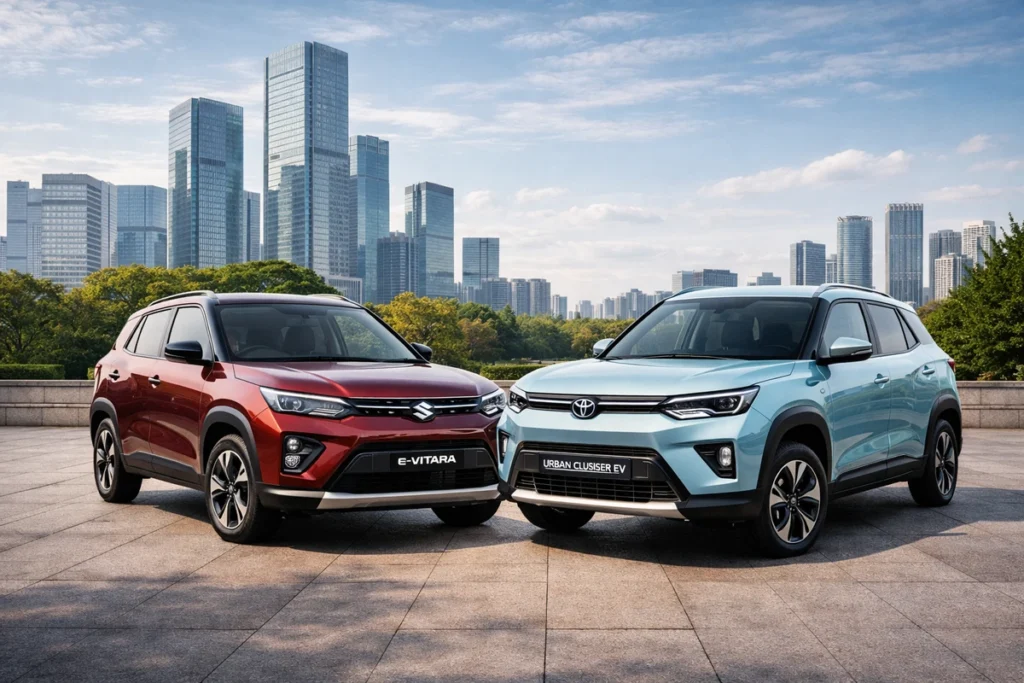
These two newly launched EVs share the same batteries and platform but target completely different buyers.
For instance, both the Maruti Suzuki e-Vitara and Toyota Urban Cruiser EV use the same 49 kWh and 61 kWh battery pack options with LFP chemistry. In general, LFP batteries handle Indian heat better than NMC batteries (NMC is more commonly used in many global markets).
Mainly, the e-Vitara targets mass market volume buyers who want Maruti’s widespread service network. The ex-showroom price sits around ₹16-22.5 lakh (~$18-25k).
On the other hand, Toyota depends on its reliability image with Indian buyers, and prices are slightly higher for the brand premium. Its service centers might be fewer, but Toyota customers stick around for long-term peace of mind.
Pick the EV That Fits Your Commute
Electric cars in the Indian market now cover a wide budget, starting from ₹7-25 lakh (~$8-28k), along with range options spanning 230 km to 456 km. The price tiers are also reasonable once you match your daily driving to battery size.
However, before you book, check the actual dealer wait times for your preferred variant and color. We suggest test-driving at least two models in your budget. Also, check charging availability near your home and office, as it’s one of the most important factors in day-to-day EV ownership.
For detailed guides on home charging setup, battery care, and EV ownership costs, visit EVoasis. You’ll find all the details that new EV buyers need to know.