
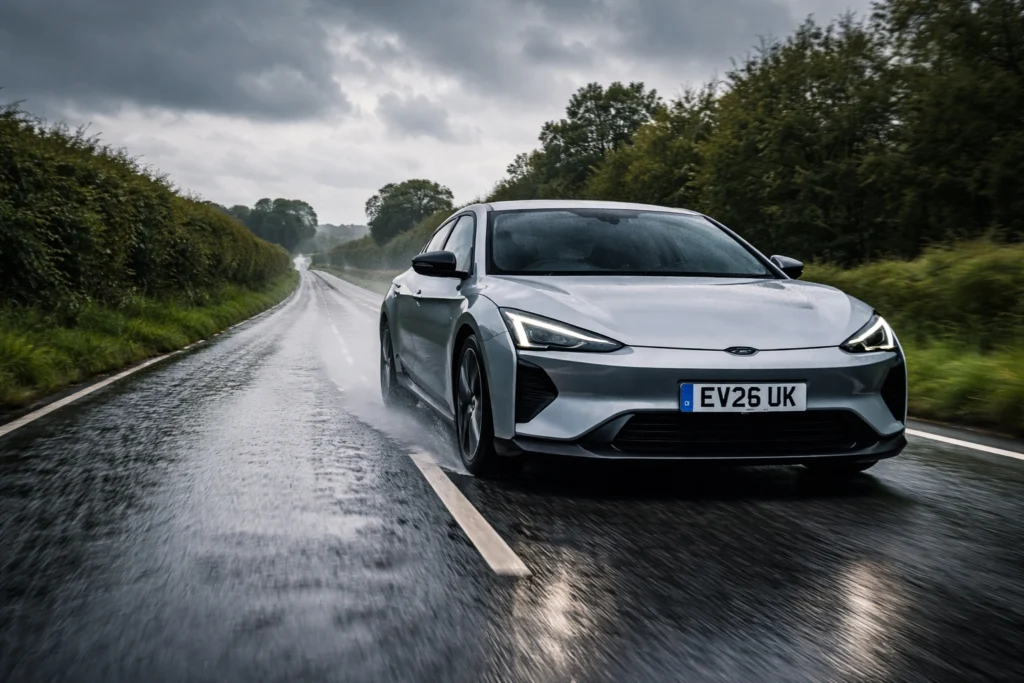
Finding the best EV cars in 2026 for UK roads looks very different from how it did two years ago. Back then, the affordable end of the market was thin, and long-range options carried a steep premium. That has changed, with manufacturers now competing harder on price, range, and real-world usability across every budget.
The Best EV Cars for UK Roads in 2026
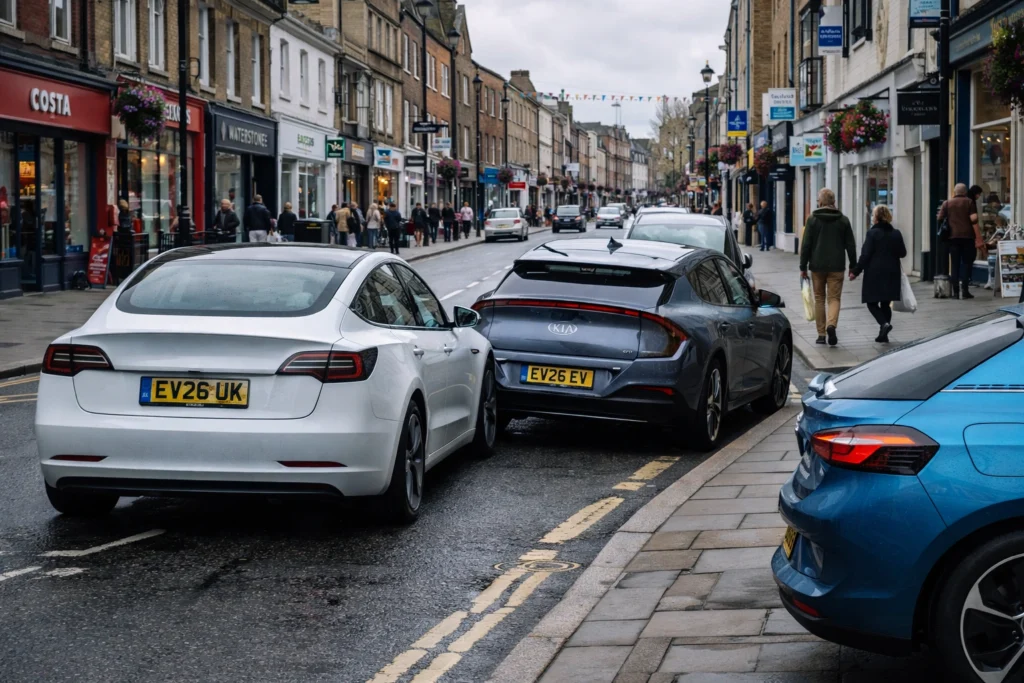
The 2026 UK market now offers a genuine variety. At the budget end, models like the Dacia Spring start under £16,000, while premium long-range options such as the BMW iX deliver over 350 miles on a full charge. It’s a similar story to what we’re seeing across the best EV cars in the USA for 2026, where options now span every price point.
Meanwhile, established names like Tesla, Volkswagen, and Kia now compete alongside Chinese manufacturers such as BYD and MG.
This growing competition has pushed real-world range and charging speeds higher across the board, with most 2026 EVs now offering 250 miles in typical driving conditions. As a result, range anxiety is becoming less of a concern for many UK drivers than it was even a year ago.
The sections below break down the strongest options by budget, range, and everyday use.
Affordable Electric Cars That Actually Impress in 2026
Affordable electric cars used to mean short range, slow charging, and basic interiors. But the 2026 lineup tells a different story, with entry-level models now delivering better quality, technology, and practicality without premium pricing.
Among the most affordable electric cars in the UK market for 2026, three models stand out: the Renault 5 E-Tech, the Dacia Spring, and the Fiat Grande Panda.
Renault 5 E-Tech and Dacia Spring: Small Cars, Big Value
The Renault 5 E-Tech starts from £21,495 with an official WLTP range of 250 miles, and can charge from 15% to 80% in around 30 minutes on a rapid charger. So if your driving is mostly local with the odd longer trip, it handles both comfortably.
The Dacia Spring, by contrast, starts from just £15,990, making it the cheapest small electric car available in the UK. It offers up to 140 miles WLTP range, which is more than enough for most daily commutes, especially when paired with overnight home charging. That means you no longer have to sacrifice practicality just to keep the price down.
Fiat Grande Panda: A Fresh Option Under £21,000
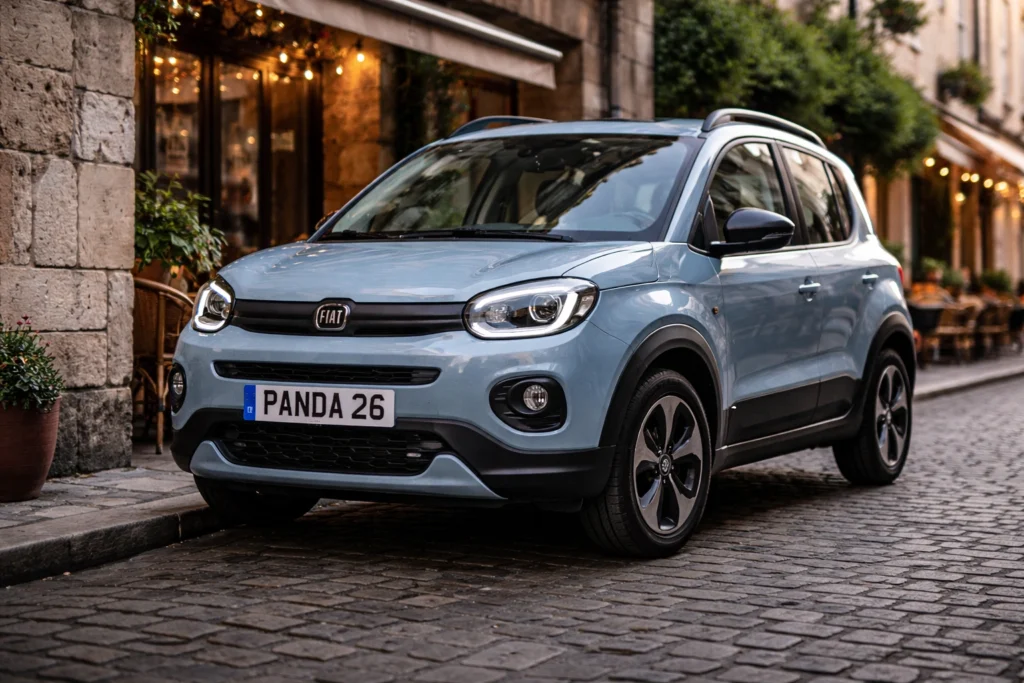
Named Supermini of the Year by Auto Express and Best Small Car by Autocar, the Fiat Grande Panda offers up to 199 miles WLTP range. It features soft-touch materials throughout the cabin and a modern infotainment system. Plus, its compact dimensions make it highly practical in city traffic, while the smart interior layout maximizes passenger and storage space. All of this starts from £20,995.
Best Long-Range EVs for UK Motorway Driving
Long-range EVs in 2026 have improved enough that many UK motorway trips can now be completed on a single charge. Two models stand out at opposite ends of the budget:
- BYD Dolphin: Starting from £30,200, it delivers up to 265 miles WLTP range, which suits most inter-city motorway journeys without pushing into premium price territory. For drivers who do regular long runs but don’t want to spend BMW money, it’s a practical middle ground.
- BMW iX: At the higher end, the BMW iX reaches 318-364 miles depending on the variant. That range makes it one of the few EVs that can handle routes like London to Edinburgh without a mid-journey top-up.
For most UK buyers, the BYD Dolphin covers everyday motorway needs at a more accessible price. The BMW iX makes more sense when maximum range is a real requirement, not just a nice-to-have.
EV Charging Points in the UK: Coverage, Speed, and Real-World Use
As of January 2026, the UK has 88,513 public charging points across 45,242 locations, and the network continues to expand by hundreds of new points each month. That growth includes a mix of slow chargers (7-22kW), rapid chargers (50kW), and ultra-fast chargers (150kW ), giving drivers more speed options than ever.
In practice, charging is often easier than the numbers suggest. Many UK EV owners charge at home overnight, which handles most of their weekly driving without needing a public stop. For longer motorway journeys, Tesla’s Supercharger network, now open to non-Tesla EVs, has improved rapid charging availability considerably.
To keep running costs down, simple EV charging habits, like timing sessions during off-peak hours and avoiding unnecessary rapid charging, can cut charging costs over time.
Is an Electric SUV Worth It on UK Roads Right Now?
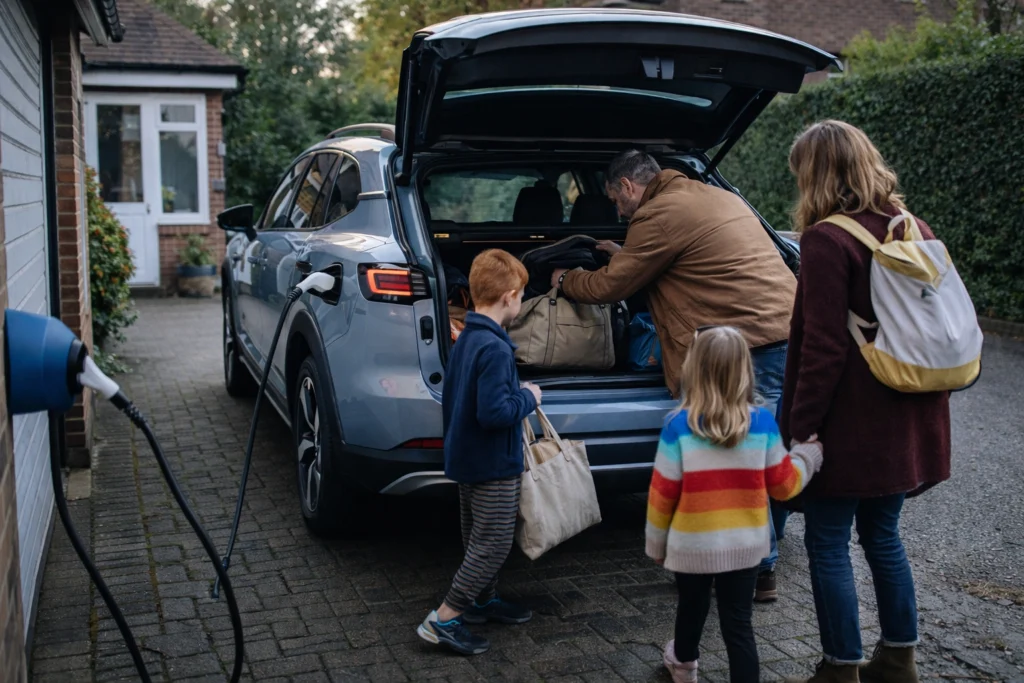
For many UK buyers, yes. Electric SUVs offer more boot space, better rear seat comfort, and refinement that suits longer trips well. They also tend to come well-equipped as standard, with heated seats, climate control, and driver assistance features across most 2026 models. The instant torque of electric powertrains also makes them surprisingly responsive for their size.
The financial case is especially strong for company car drivers, largely due to salary sacrifice schemes and favourable Benefit-in-Kind (BiK) tax rates. As a result, electric SUVs can be considerably cheaper to run than comparable petrol models.
However, electric SUVs aren’t suitable for every buyer. Charging access, upfront cost, and range concerns remain the main barriers to EV adoption, and will ultimately determine whether an electric SUV is right for your needs.
Your Next EV on UK Roads Starts Here
EV cars in Britain offer more choice than ever in 2026, from sub-£16,000 city cars to long-range premium SUVs. With so many options available, the right choice depends on three things: how far you drive each day, where you can charge, and what you’re comfortable spending. Get those three right, and the decision becomes much clearer.