
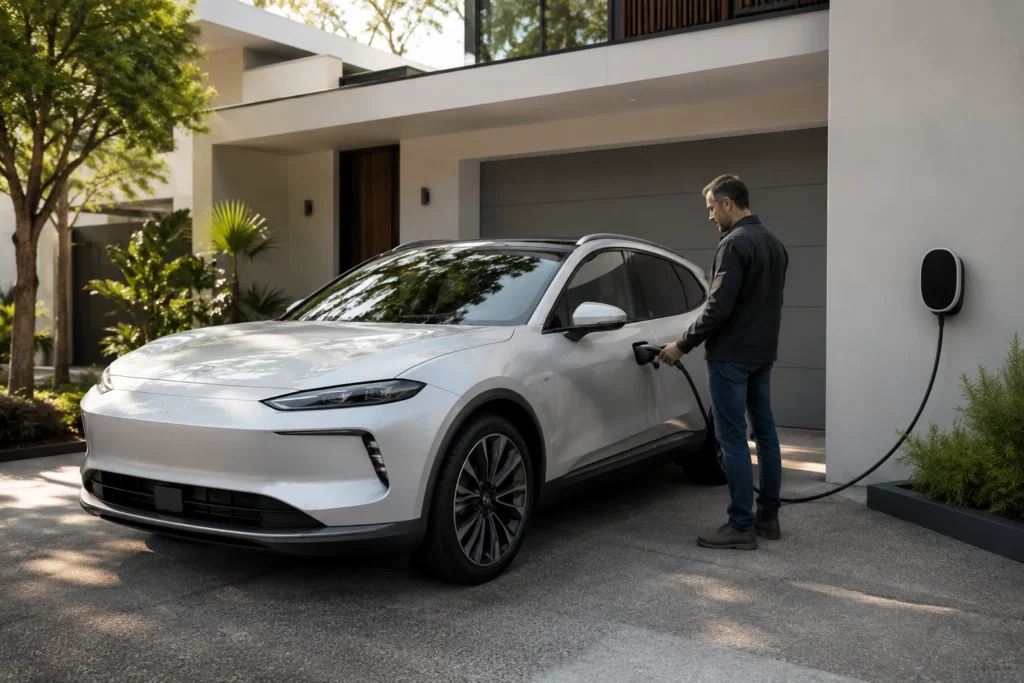
Most people think of electric vehicles as a straight swap: petrol out, battery in, same car, cleaner fuel. That’s only a small part of the story, though. EVs are now influencing how Australian cities handle transport, how households use electricity, and how entire industries prepare for what’s next.
At EVoasis, we’ve been tracking these shifts closely for years. That means watching charging infrastructure spread across the country while governments at every level roll out new incentives. And the more we dig into it, the clearer it becomes that the EV story is bigger than the car itself.
This guide covers what that looks like in practice. You’ll learn how electric vehicles are affecting daily commutes, consumer spending, renewable energy, and city planning across Australia. We’ll also cover the latest EV facts and where policy is heading in the years ahead.
How Electric Vehicles Are Changing Everyday Life
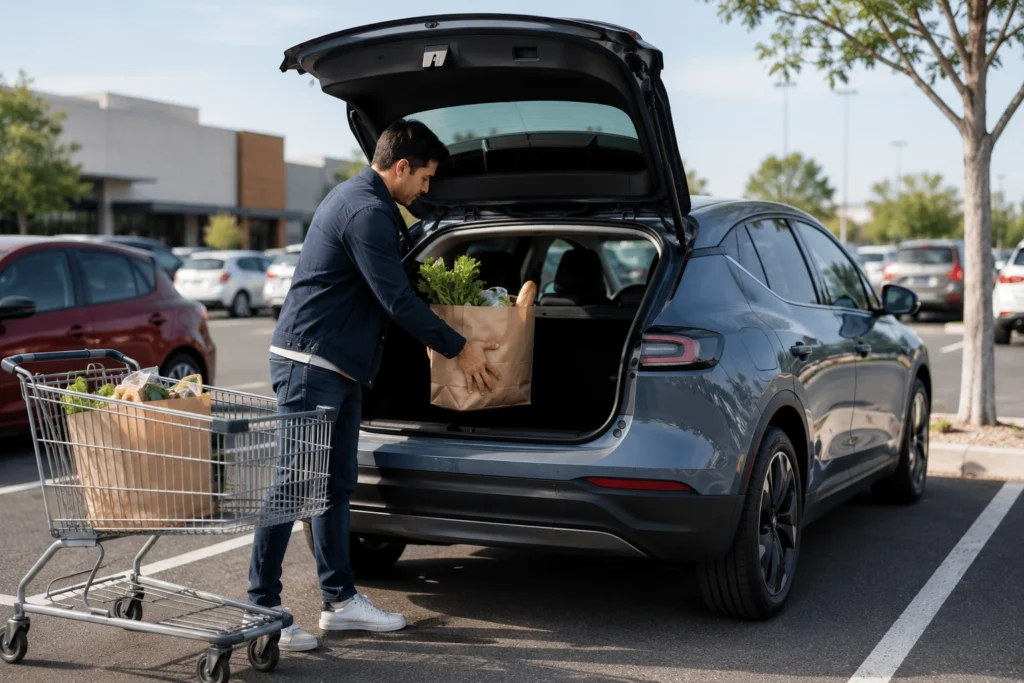
Electric vehicles are all over Australian roads now. But the ripple effects go further than that, right into how shopping centres, offices, and toll roads operate.
Here’s how it plays out in two areas most Australian drivers notice first.
Chargers at Work and at the Shops
Shopping centres around Brisbane, the Gold Coast, and other parts of Australia are installing EV charging stations to pull in more foot traffic. Drivers plug in while they browse or grab lunch, which keeps them in the building longer and spending more.
Employers are catching on, too. Workplace charging now sits alongside perks like free parking and gym memberships, giving staff one less reason to worry about battery range.
What It Means for Your Daily Commute
For a lot of EV drivers, the morning commute looks completely different now. Running on electricity instead of petrol or diesel can save the average household over $1,500 a year in fuel costs. Some toll roads in Sydney and Melbourne even offer discounted rates for electric cars and other low-emission vehicles.
On top of that, some employers are adjusting schedules around off-peak electricity rates so staff can charge their vehicles at the office for less.
Now, let’s look at how all of this is changing the way people buy cars.
Why Battery Electric Vehicles Are Shifting Consumer Behaviour
In 2024, nearly 1 in 10 new vehicles sold in Australia was electric. That figure has been growing quarter by quarter, and it says a lot about what Australian drivers now prioritise when they purchase a vehicle.
How Buyers Are Weighing Up the True Cost
We’ve had this conversation with enough EV buyers to know that battery range anxiety is fading. Running costs have taken over as the main deciding factor. Buyers are comparing total ownership over five years, including electricity versus petrol, servicing fees, and savings from regenerative braking.
Depreciation concerns are also easing as battery technology improves and manufacturer warranty terms extend to 8 years or more.
The Used EV Market Is Growing Fast
Early adopters across Australia started trading up to newer models through 2024, and that created a wave of used battery electric vehicles hitting the market. Buyers shopping in that space now get battery health reports as a standard part of the process, much like vehicle history checks for petrol and diesel cars (some of those second-hand deals are worth a serious look).
What makes this worth paying attention to is the battery range on these older passenger cars. Most still sit comfortably above 300 km, which is more than enough for the average Australian commute.
How Renewable Energy and EVs Work Together
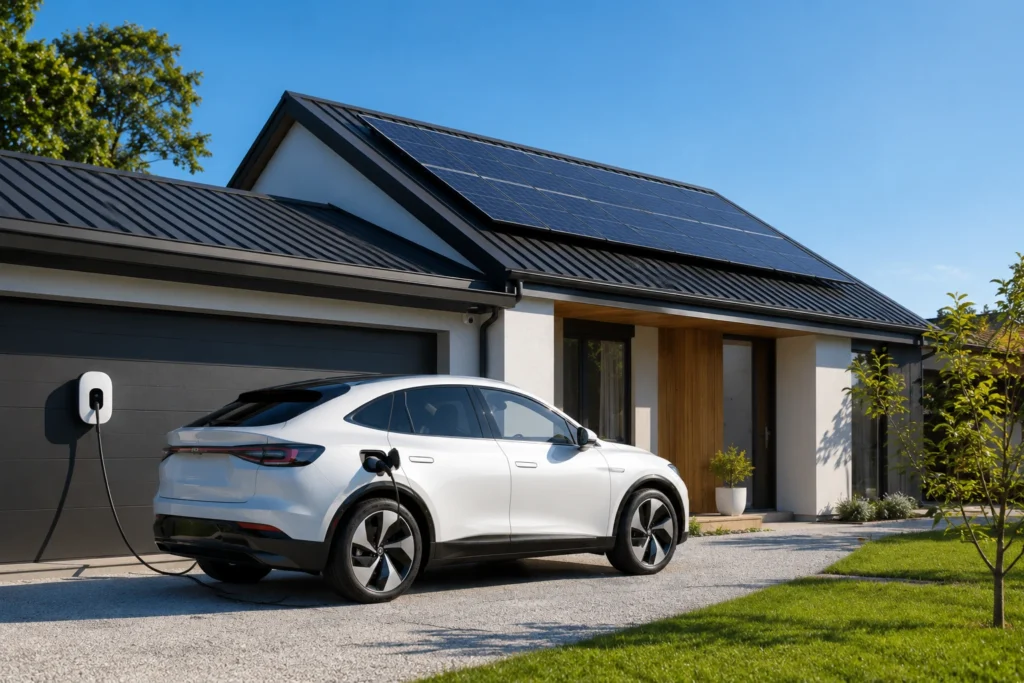
One of the best things about owning an EV in Australia is pairing it with rooftop solar to cut your running costs down to almost nothing.
If you’ve got panels on your roof, you can charge your vehicle during the day using the electricity you already produce. Pair that with a home battery, and you can store cheap off-peak energy for overnight charging too. The combination of renewable energy and electric vehicles means Australian households can run like their own little power stations.
Believe it or not, over 4.2 million Australian homes and businesses had rooftop solar by mid-2025, according to the Clean Energy Council’s Rooftop Solar and Storage Report. That uptake rate leads the world on a per capita basis, and the country’s electricity generation mix keeps shifting toward renewables every year. For EV owners, that means cheaper driving today and even cheaper driving tomorrow.
Then there’s vehicle-to-grid technology, which takes this a step further. V2G lets your EV send stored energy back to the grid during peak demand periods. Pilot projects in New South Wales and South Australia are already testing this with households and energy retailers. Within the next decade, this technology could make EV owners small-scale electricity suppliers who earn credits on their power bills.
And it’s not just homeowners paying attention. Councils and city planners are building EV charging into their long-term infrastructure projects too.
The Role of EV Charging in City Planning
Councils and urban planners across Australia are now building EV charging into the same strategies they use for roads, buses, and rail. Even two years ago, most city plans didn’t mention it at all.
So, let’s look at the initiatives driving that shift across different levels of government.
- Updated Planning Codes: Local and territory governments are writing charging requirements into the rules for new apartment blocks and commercial buildings. If a development doesn’t include charging, it may not get approved.
- Integration With Public Transport: Planners are now mapping charging networks alongside bus and rail routes as part of broader transport strategies. The objective is to make electric vehicles a practical option for commuters who connect between modes.
- Grants for Regional Projects: Federal government and state programs are funding charger installations in regional towns across the country. Areas like Toowoomba and Ballarat have added over a dozen new stations in the past 12 months alone.
- Dwell Time Business Models: Charging hubs at cafes, gyms, and libraries are replacing the old petrol station model. A typical session lasts 20 to 40 minutes, which gives local businesses more time with customers.
We saw this happen in regional Queensland, where charger numbers went from almost zero to dozens in under two years.
And frankly, any council that isn’t planning for more charging infrastructure right now is going to struggle to catch up. The projects already underway show where urban transport in Australia is heading next.
What EV Technology Means for Jobs and Industry
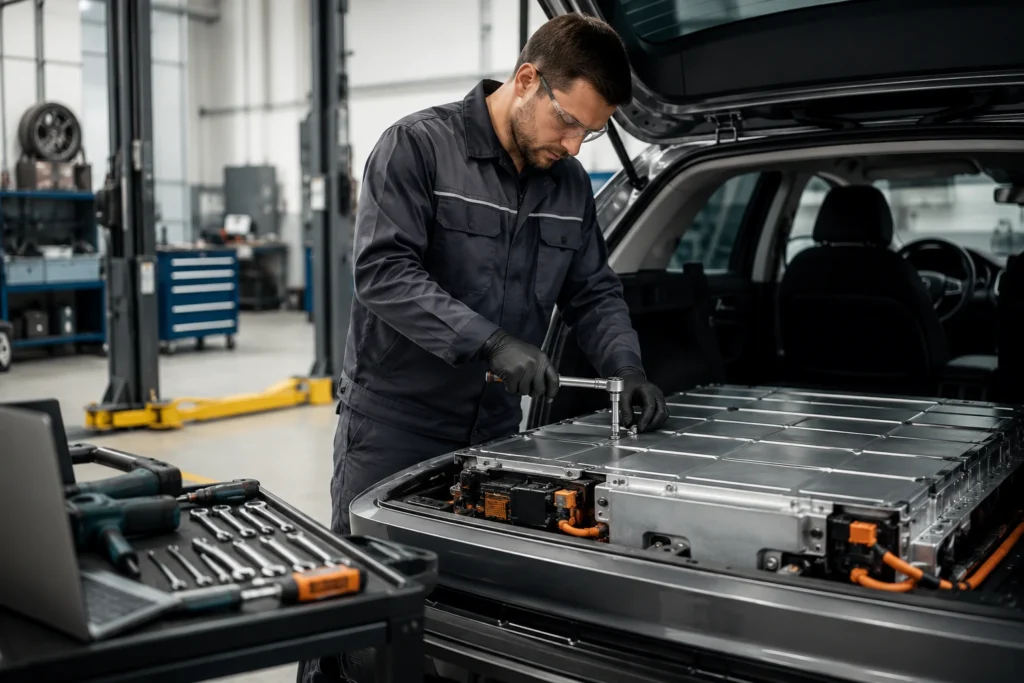
Once the infrastructure is in place, the next question is: who’s going to build, install, and maintain all of it? Australia’s EV sector is producing new roles that didn’t even exist five years ago, and the growth is spreading across multiple industries.
Two areas stand out the most right now.
New Careers in the EV Space
Demand for EV-certified mechanics, battery technicians, and charging network installers is climbing across every state.
TAFE and university programs are responding with dedicated courses, including certificates in electric motor servicing and battery diagnostics. Volvo, for example, now requires all of its Australian dealer technicians to complete specialised electric vehicle training.
Government projections suggest the broader sector could support over 26,000 direct roles in manufacturing, installation, and services by 2030.
How Traditional Industries Are Adapting
On the other side of the coin, established industries are being forced to rethink how they operate.
Like how petrol station operators are developing hybrid sites that combine fuel pumps with DC fast chargers. Auto dealerships have even started retraining sales teams to walk buyers through battery range, charging options, and total cost of ownership. Insurance is shifting too, with companies reworking their models to account for components like battery packs and regenerative braking systems.
The writing is on the wall here. These industries either move with the market, or they lose ground to competitors that already have.
Future Mobility and Sustainable Transportation in Australia
Now that we’ve covered how EVs affect daily life, energy, cities, and jobs, here’s where it’s all heading. Government policies at every level are accelerating EV adoption across Australia. Here’s a snapshot of the current numbers against projected targets.
| 2024 | Projected 2030 | |
| EV share of new car sales | ~9% | Over 30% |
| Public charging stations | ~6,000 | ~18,000+ |
| Average battery cost per kWh | ~$190 AUD | ~$110 AUD |
These projections aren’t just wishful thinking. Several Australian states have already removed or reduced stamp duty on electric vehicles. The luxury car tax threshold sits higher for fuel-efficient vehicles than for petrol or diesel models too (over 40 models were available under $60,000 in Australia as of mid-2025).
On top of that, the federal government’s New Vehicle Efficiency Standard is pushing manufacturers toward lower emissions objectives across their fleets. Rebates and support initiatives vary by state and territory governments, so buyers should check their local government website for current offers.
According to the IEA’s global EV growth report, Australia’s uptake strategy is tracking alongside other developed countries, with average battery costs expected to drop below $100 AUD per kWh by the early 2030s.
Where Electric Vehicles Are Taking Us Next
Electric vehicles are already woven into how Australia moves, powers itself, and creates jobs. The transport sector, the energy grid, and the workforce are all shifting at the same time. And that pace is only going to increase as battery costs drop and charging networks grow.
If you’re thinking about making the switch, or you just want to learn more, EVoasis has you covered. Check out our guides, reviews, and charging resources to get started.