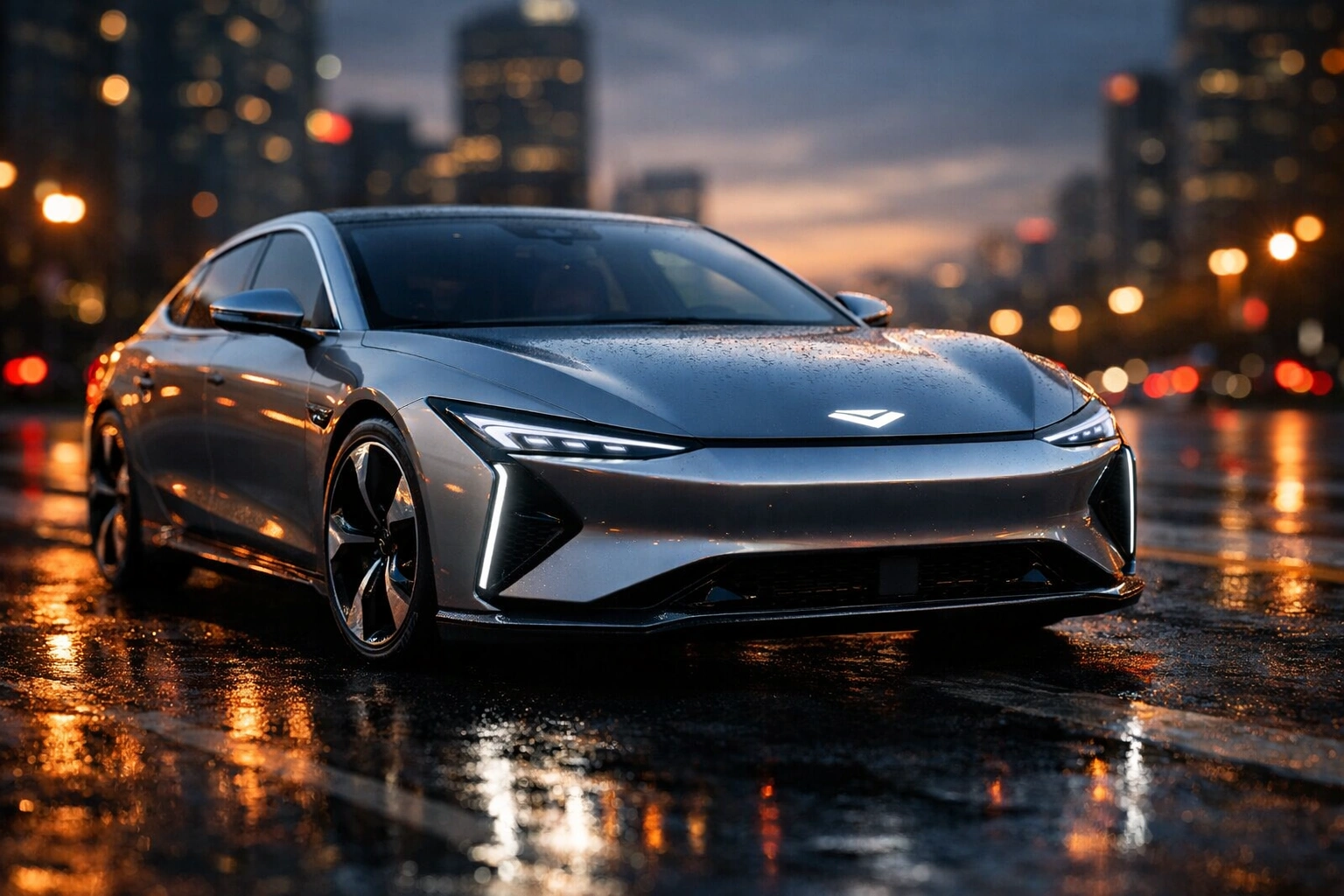
The BYD Seal and NIO ET7 are among the best Chinese EV cars of 2026. The Seal delivers a strong range at a competitive price, while the ET7 offers battery-swap capability that no mainstream Western brand currently provides at scale.
What’s more, they reflect a broader shift. China EV brands are releasing competitive models, and some of them are going head-to-head with established global manufacturers across every price range.
Why China EV Brands Are Pulling Ahead in 2026
Chinese automakers committed early to electric vehicles while many Western brands were still finding their footing in the EV space. They built dedicated EV platforms, scaled battery production aggressively, and reached price points that established manufacturers are only now approaching.
BYD is a good example of what that early commitment looks like on the road: strong range, innovative battery technology, and competitive pricing across multiple segments. Two of their most recognized models show exactly how far that commitment has come.
BYD Seal: One of the Best Chinese Electric Cars in 2026
The BYD Seal delivers 570 km WLTP range, priced from around $54,500 to $61,500, depending on trim and configuration. Its low drag coefficient helps maintain that range even at highway speeds. And in real-world testing, it consistently delivers close to what the spec sheet claims.
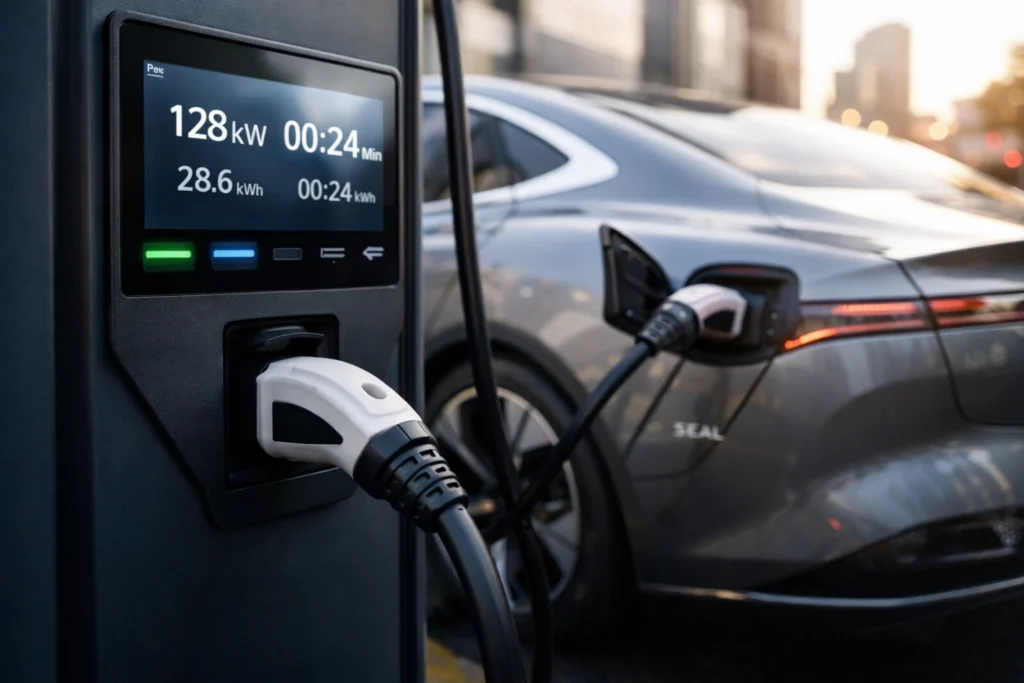
If you want performance on top of that, the four-wheel drive version hits 100 km/h in 3.8 seconds from a 390 kW motor. It also fast charges at 150kW, getting you from 30-80% in just 26 minutes, which keeps charging stops short on longer trips.
BYD Sealion: Battery Technology and Range Explained
The BYD Sealion runs on BYD’s Blade Battery, a lithium iron phosphate design that prioritizes safety and longevity over raw energy density. Unlike standard lithium-ion packs, Blade Battery cells resist heat buildup, which significantly reduces fire risk. This makes it a more dependable option for everyday use.
That dependability extends to range as well. The 91.3 kWh battery delivers over 500 km in mixed driving conditions, which is enough to handle long-distance trips without constant charging stops. For daily use, overnight home charging keeps it topped up with minimal effort.
If reliable, low-maintenance battery technology is what you’re after, the Sealion is a strong option to consider.
Other Chinese Electric Cars 2026 Worth Watching
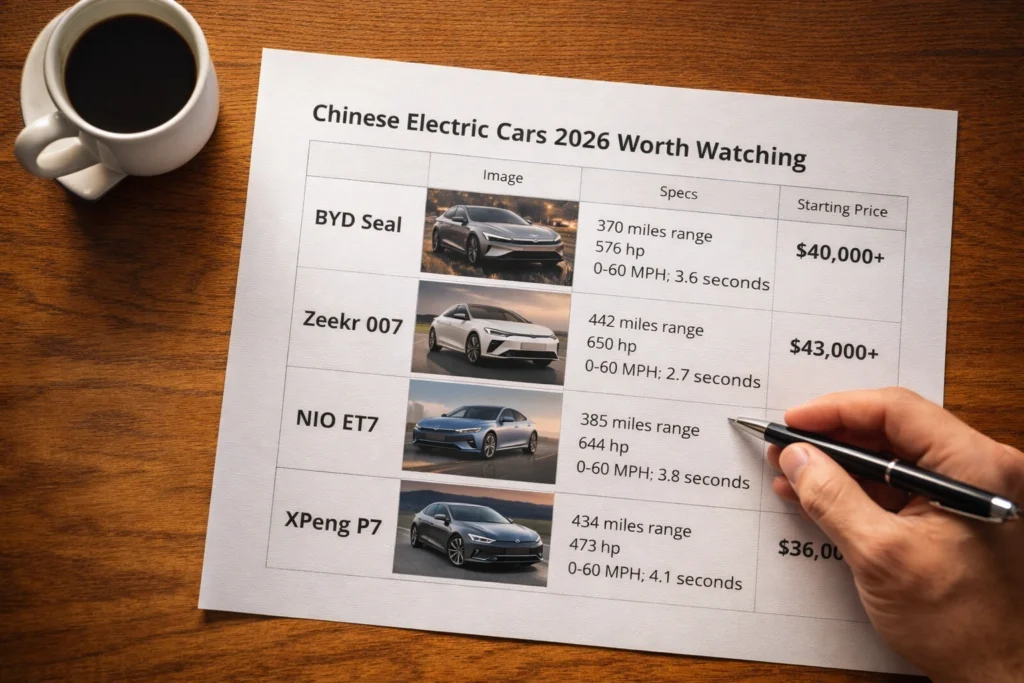
BYD often dominates conversations about Chinese EVs, but some of the most interesting models in 2026 are coming from brands you might not have heard of yet. Here are three worth keeping on your radar:
- Xpeng Mona 03: Looking for an affordable daily driver with serious range? This compact sedan delivers 620 km CLTC range and fast charging that adds 200 km in just 15 minutes. With a starting price of ¥119,800 (around $16,500) in China, it stands out as one of the most compelling affordable Chinese EV cars on the market.
- NIO ET7: NIO’s automated battery swap stations replace a full pack in 3 minutes, about as long as a quick fuel stop. No mainstream Western brand currently offers anything like it at this scale, so if public charging infrastructure is a concern for you, it’s a practical alternative to keep in mind.
- Yangwang U7: At the performance end of the spectrum, the U7 delivers supercar acceleration, 0-100 km/h in 2.9 seconds from a four-motor system producing 1,306 Ps. You also get 720 km CLTC range from a 135.5 kWh Blade Battery. It’s a lot of value for around $86,500.
Each model serves a completely different buyer, so which one makes sense depends on what you prioritize in an EV.
Are Chinese EVs Actually Well Built?
For the most part, yes. Chinese brands like BYD and MG have come a long way from their early models, where panel gaps and inconsistent materials were common complaints. Today’s models feature improved fit and finish, softer interior materials, and a cleaner cabin design that feels far more competitive.
Safety testing supports that progress. For example, the BYD Sealion 7 earned a five-star rating in the 2025 Euro NCAP crash tests, helping ease concerns that once surrounded Chinese EV brands. However, build quality still varies across different manufacturers and price segments, so this is not a universal guarantee across the market.
That’s why you should always check real-world owner reviews alongside the specs. Strong safety ratings and attractive features don’t always translate into long-term ownership satisfaction.
After-Sales Support and Autonomous Driving: What Buyers Should Verify
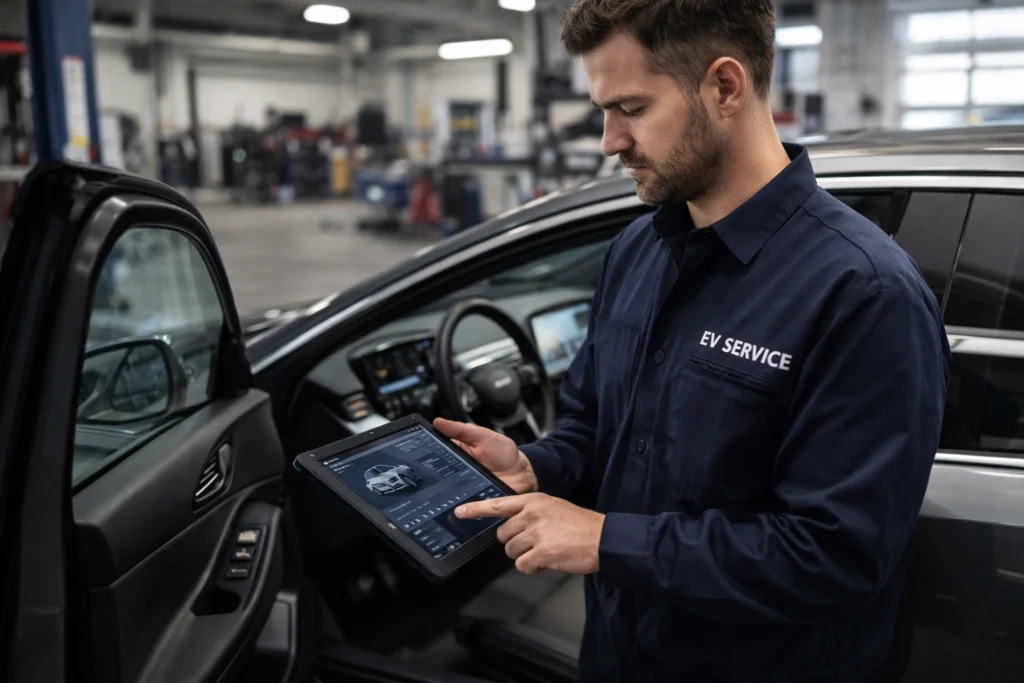
Many 2026 Chinese EVs come with Level 2 autonomous driving as standard, but service network coverage is still inconsistent based on where you are. Here’s what to check before committing:
| What to Verify | Why It Matters |
| Local service centers | Fewer locations mean longer wait times for repairs and software updates |
| After-sales support terms | Warranty coverage and response times vary across Chinese manufacturers |
| Autonomous driving features | Most include driver assistance as standard, but Level 3 capability is still limited to select models |
| Connectivity features | Apple CarPlay and Android Auto availability varies, so confirm before you sign |
Chinese EVs are expanding into the US market, the UK market, and the European market, but after-sales support infrastructure hasn’t always kept pace with sales growth. Verifying local service coverage before you buy is just as important as comparing specs.
Where Chinese EVs Fit in the Best EV Cars of 2026
The models covered here, from the BYD Seal to the Yangwang U7, show just how wide the Chinese EV segment has become. There’s something for nearly every type of buyer in 2026. Range figures remain competitive, technology continues to advance, and pricing is putting real pressure on established brands to respond. For anyone building a shortlist of the best EV cars of 2026, these vehicles have firmly earned their place.